Informational Text – Text that is explanatory in nature and conveys factual information to increase an individual’s knowledge of a subject matter. There are many different types of and genres of informational text, including textbooks, technical texts such as “how to” books, manuals, newspaper and magazine articles, reports, summaries, and online resources, as well as books about science, history, social studies, and the arts.
Academic Language – The words that are not typically used in everyday conversations, but rather vocabulary that relates to academic content.
Readability – The relative accessibility or difficulty of a text. Readability formulas can help estimate the difficulty of any text, but they are not intended to be precise indicators. These formulas typically involve a measure of sentence length and word length to ascertain a grade-level score for text materials.
Organizing Informational Text Instruction
InformationalTextCircles – Similar to literature circles, informational text circles are a cooperative learning strategy in which students assume different roles as they read in small groups.
Jigsaw – A cooperative learning strategy in which students assume roles as they read and share their understanding of the content in small groups. Or, A cooperative learning strategy in which students read selections of informational text and become experts in the topic. The experts share with members of small groups.
Below is an example of a step-by-step Jigsaw Lesson Plan.
Idea Sketches – Idea sketches are the use of graphic organizers that students complete in small groups as they read informational text/textbook material. Here is how idea sketches work:
Introduce the overall topic under study and activate the students’ background knowledge through discussion. Point out the organization of the text by referring to main topics and subtopics.
Chunk the text by dividing it into manageable sections. Topic headings or subtopics work best for this.
Divide the class into small groups or pairs, and assign (or have students select) the chunk they will read.
Instruct the groups to place the topic of inquiry (topic or subtopic) in the center of a large poster board and circle it. This is the beginning of the “sketch.” Model how to construct a graphic organizer by sketching boxes, circles, triangles, diamonds, or other shapes to represent main ideas and details.
Each group reads its chunk of text either orally or silently, and together students sketch the information as they design a graphic organizer that represents the information read. At this time the teacher circulates among the groups to assist, guide, and clarify any misinformation.
Display the poster boards in chronological order according to the original text and have the members of each group share what they learned. Add clarifying information as needed and discuss the relationships among the poster board topics. Sticky notes for additional information or questions can be added to the boards.
Trade Books – Literature and informational books widely available in bookstores; Used by teachers to supplement or replace sole dependence on textbooks and reading or content area instruction. In other words, informational books used to supplement the curriculum and content textbooks.
Text Sets – Groups of books that share related concepts in different formats, or a group of trade books that have a common theme. Teachers need to use a variety of genres when considering informational texts and educational researchers recommend using text sets that include storybook formats.
Informational/Nonfiction Text Types
Narrative Informational Text – Books and texts in which the author typically tells a story that conveys factual information. Many time the author tells a fictional story that conveys factual information. *These books are typically read from beginning to end
Expository Informational Books – Books that contain information that typically follows specific text structures such as description, sequence, cause and effect, comparison and contrast and problem solving. These books do not contain stories and they often contain features such as a table of contents, a glossary, a list of illustrations, charts, and graphs. *These books do not have to be read in any particular order.
Mixed Text Informational Books – These books narrate stories and include factual information in the surround text and are sometimes referred to as combined-text trade books. With books of this type, it is important to help the students distinguish fact from fiction.
IdeaCircles – A literature circle in which readers engage in discussions of concepts they have been exploring in trade books and other types of texts. These Small peer-led group discussion of concepts are fueled by multiple text sources. The teacher introduces and the students go off and read different informational texts. Then, they all bring back information about the concept from different resources and discuss facts and relationships with the concept.
ClassroomApplication – While this chapter covered a great deal about informational text and such, one of the key things that stood out for me was how to organize the reading of informational texts. Particularly, using informational text circles and the jigsaw cooperative learning strategy. These interactive learning strategies can be very effective for students. One of the reasons is because they are not being overwhelmed with having to learn so much about a particular topic. In these cases, the students are put in groups and each student is assigned a particular role in the learning process. Some students are visual information gatherers, fact finders, picture takers, and cartoon creator. While some are “textmasters” who discuss the vocabulary and text directly while also summarizing with or for the group. With the jigsaw method, students are put into groups, and they are each assigned a different section to focus on. One student might be looking for details about the geography of a region, one might be looking at the climate, and another might be looking at imports and exports. The students in their groups then get back together and share all of the knowledge they have gained. As a team they each share details to get a much bigger picture of their topic instead of focusing on learning all the details by themselves. These interactive and cooperative learning strategies are great for many different topics and when done effectively students can learn more from their peers and their teacher together.
Video Notes
https://youtu.be/oNBv1sVDiBI – Informational Text Whole Group Reading Lesson: This video involves a whole group kindergarten class using schema maps and informational text during an interactive read aloud. During this great lesson and read aloud, the students are active participants and there are numerous opportunities for learning through conversation and discussion. The lesson starts off with the teacher asking about schema and its definition. After defining it, he then moves on to the lesson topic and asks the students about what type of schema they already have for weather. They then talk about and list all the things they know about weather before they begin the read aloud. As they begin to read the book, they go over things like what nonfiction vs fiction is, what the title is, who the author and illustrator are, and more. The read aloud was full of great teaching moments using open ended questions and discussion as well as citing the text for answers. They talk about what words they know and don’t know as well as explaining certain details more thoroughly.
https://youtu.be/zxzU2TmFLiw – 6th Grade Close Reading of Informational Text Part 1: In this video, a teacher goes through a close reading of a complex text with 6th grade students. He first provides some historical background information before he begins to activate learning. He then goes over the learning objective for the lesson and thoroughly explains what it means and what they are going to do. The teacher then goes over what the students are going to have to do during the lesson which is, “We will answer questions using evidence form the text to support our answers.” Next, he explains what good readers do and how close reading focuses on What the text says, how the text says it, and What the text means. During the readings he points out many things the students must pay close attention to too and poses many questions about the text while constantly referring them back to the text to cite their evidence. During/after the lesson, he also differentiates the lesson for students who may need extra help. He has the students participate actively with their peers and makes time for proper discussions amongst the students. Great lesson on a close read of an informational text with active student participation.
https://youtu.be/3mAl9QMJJTo – Nonfiction Text Features: This brief video goes through the many different features of nonfiction text. It goes over many of the key terms like title, table of contents, charts, graphs, tables, diagrams, etc. These key terms are thoroughly explained and have great visuals to help us understand them better. Fantastic short video for all.
NarrativeText – Literature that tells a story and is characterized as fiction. There are many genres of narrative text: mysteries, fantasies, fairy tales, science fiction, myths, and folk tales. Historical fiction is another genre as well where there can be text with a mix of fact and fiction.
Elements in a Story – The setting of a story introduces the main character, and the plot is made up of one or more episodes and includes a chain of events. The following elements are generally included:
Abeginningorinitiatingevent – Either an idea or an action that sets further events into motion.
Internalresponse(followed by a goal or problem) – The character’s inner reaction to the initiation event, in which the character sets a goal or attempts to solve a problem.
Attempts – The character’s efforts to achieve the goal or alleviate the problem; several attempts may be evident in an episode.
OneorMoreOutcomes – The success or failure of the character’s attempts
Resolution – The long-range consequence that evolves from the character’s success or failure to achieve the goal or resolve the problem.
AReaction – An idea, emotion, or further event that expresses a character’s feelings about success or failure in reaching a goal or resolving a problem or that relates the events in the story to some broader set of concerns.
ScaffoldedInstruction – Teachers model strategies step-by-step and explicitly demonstrate the processes of thinking before, during, and after one reads. Scaffolded instruction also provides guided practice which is followed by independent practice and application.
LiteralQuestions – Questions that are based on explicitly stated information in the text.
Inferential Questions – Questions in which the reader uses background knowledge and information from the text.
EvaluativeQuestions – Questions that focus on making a judgement about what is read.
ActiveComprehension – Using prior knowledge, schemata, and metacognition to construct textual meaning; fostered by the use of questioning during reading. Could also possibly be stated as the engaged process of generating questions and making connections throughout reading.
ReQuest (ReciprocalQuestioning) – A teaching strategy that encourages students to ask their own questions about the material being read. Here’s how it works:
The teacher selects the story for the group to read and divides the literature into logical stopping points.
The group, including the teacher, reads the first section silent Play with the intent of asking a question or questions after reading.
The teacher models questions, and small group discussion takes place.
The next section is read silently followed by another question or questions by the teacher and small group discussion.
After the next section is read, the children begin asking their questions, followed by group talk.
The procedure continues with the teacher and students taking turns asking questions.
Here are the steps to how it works:
1. Discuss importance of asking questions. 2. Model the type of questions that should be asked. 3. While reading, ask questions that require questions in response (what you would like to know about the setting of the story). 4. Class words in small groups and one student plays the role of teacher by getting questions from other students. 5. Students work in pairs to ask each other questions as they read. 6. Students independently come up with questions and discuss them as a whole group.
Here are some question prompts for ReQuest: What does _____ remind you of? Do you know someone like the character ______? Do you agree with what _____ did in the story? What do you think will happen next in the story? What do you think the author chose _____ as the setting? What do you picture in your mind when you read this part of the story?
QAR’s (Question-Answer Relationships) – A comprehension strategy that enhances children’s ability to answer comprehension questions by teaching them how to find the information they need to respond. Explicit instruction will make students sensitive to two information sources where information can be found: the text and the reader.
Text: Some answers can be found right there in the text while others demand a think and search strategy. The student searches for the information and thinks about relationships that exist among the bits of information found.
Reader: Some answers must come from the reader’s mind. These questions might state, “What do you think about…” or “How do you feel about…”
Question the Author (QtA) – A comprehension-centered instructional strategy designed to show readers how to question the author’s intent while reading. This strategy models for students the importance of asking questions while reading.
CloseReading – The same selection is read several times in order to locate, explain, identify, and be able to discuss and analyze the text in depth and support answers to questions with examples from the text. reading complex texts multiple times in order to gain multiple levels of meaning for different purposes through analysis. An important purpose of close reading is teaching children how to read analytically.
AnnotatingText – A note taking strategy in which students jot down thoughts within the actual text and margins that indicate the evidence that supports text-based questions. Teachers need to model for students the process of annotating. Teachers can also show students they can use highlighters, colored pencils, colored pens, or even sticky notes and “code words” to make annotations.
ReciprocalTeaching – Reciprocal teaching-an approach to scaffolding reading comprehension in which teachers introduce four strategies, model the strategies, and gradually encourage independent use of the strategies in small groups as student takes on the role of teacher. The four strategies are:
Predicting what the text is about
Raising questions about the text
Summarizing the text
Clarifying difficult vocabulary and concepts
Here is a brief step-by-step lesson on Reciprocal Teaching:
Select a story in which you can identify conflict.
Read the text closely and identify major themes where questions may arise.
Segment the text so students stop reading at a critical point.
Construct questions that prompt the students to think about what the author suggests by rereading the text.
Continue with thoughtful queries that encourage the students to question the author.
For Reciprocal Teaching in Primary Grades:
Teacher introduces prereading strategies by modeling how to make predictions and setting a purpose for reading.
Using the fishbowl technique, the teacher models the strategy in the center of a circle while the rest of the class observes.
Students are groups and the teacher provides substantial support while the students practice the strategy. Student who participated in the fishbowl activity are the leaders of the groups, other students are the prediction maker, questioner, clarifier, visualizer and summarizer.
Students are grouped and the teacher provides reduced support while they practice the strategy.
Students are grouped and teacher provides even less support, individuals are held accountable through written responses.
Think–Alouds – A strategy in which teachers and students share their thoughts, discuss what they wonder about and what confuses them, and make connections as they are reading. A great opportunity to conduct think-alouds is when teachers read aloud to students. By modeling comprehensive strategies that involve asking questions, making predictions, visualizing, making judgments, and sharing personal connections, teachers invite students to share their own thoughts. The teacher is directly modeling these comprehension strategies for students.
To conduct a think-aloud:
Teacher selects a passage which elicits ambiguity, difficult vocabulary, or contradictions.
As the teacher reads aloud, the students follow along silently and listen as the teacher describes what he/she is thinking.
After modeling, the students are encouraged to describe their thoughts.
Developing Readers’ Awareness of Story Structure
NarrativeText – Literature that tells a story and is characterized as fiction. There are many genres of narrative text: mysteries, fantasies, fairy tales, science fiction, myths, and folk tales. Historical fiction is another genre as well where there can be text with a mix of fact and fiction.
Elements in a Story – The setting of a story introduces the main character, and the plot is made up of one or more episodes and includes a chain of events. The following elements are generally included:
Abeginningorinitiatingevent – Either an idea or an action that sets further events into motion.
Internalresponse(followed by a goal or problem) – The character’s inner reaction to the initiation event, in which the character sets a goal or attempts to solve a problem.
Attempts – The character’s efforts to achieve the goal or alleviate the problem; several attempts may be evident in an episode.
OneorMoreOutcomes – The success or failure of the character’s attempts
Resolution – The long-range consequence that evolves from the character’s success or failure to achieve the goal or resolve the problem.
AReaction – An idea, emotion, or further event that expresses a character’s feelings about success or failure in reaching a goal or resolving a problem or that relates the events in the story to some broader set of concerns.
StoryMap – An analysis of a story’s organizational elements; used to strengthen instructional decisions. A story map is a way of identifying major structural elements, both explicit and implicit, underlying a story to be taught in class. A story map discusses the order of events, like time and place and characters, and the chain of events like the beginning event, the internal response and goal/problem, attempts and outcomes, resolution, and reaction.
Here are some generic comprehension questions for these categories:
Setting
Who is the main character? What is (character’s) problem?
Internal Response and Goal/Problem
What does the (character) decide to do?
Attempts and Outcomes
What happened to (character)?
Resolution
How did (character) solve the problem?
Reaction
Why did (character) do (action)?
Here are more specific comprehension questions:
Theme:
What is the moral of the story?
What did you learn from the story?
Characters:
Why do you think (character) did that
Does (character) remind you of anyone else you know?
Personal Response:
Is there anything you would have changed in the story? Was there anything in the story that didn’t make sense?
Schema/Story Schema – Story schema is the underlying structure and relationships in a story that act as a catalyst for constructing meaning and distinguishing important ideas and events. Students develop a sense of story schema at an early age when they begin to understand that stories have beginnings and endings, problems and solutions. They also begin to learn that a story’s structure centers on setting and plot.
Activities to Build Schema for Stories – Here are some activities and suggestions to help students build a better sense of story and reinforce their awareness of story schema and structure:
Read, tell, and perform stories in class on a regular basis.
Show relationships between story parts:
Use flowcharts – Flowcharts provide a visual for students to understand how stories are organized. They give children a visual image of how stories are organized and reflect best practices for mapping relationships that exist between events in the story.
Teachers must discuss flow charts and explain to students how the events in a story form a chain.
Reinforce story knowledge through instructional activities.
Children’s understanding of story structure can be extended through varied instructional tasks like storyframes and circularstorymaps.
Macrocloze stories: The teacher deletes single words from a passage; can also delete several sentences.
Scrambled stories: The story is separated into its parts and then scrambled. Students must then put story back in order.
StoryFrames – A way of heightening an awareness of stories by providing students with a skeletal paragraph in which the students fill in. There are five store frames: plot summary, setting, character analysis, character comparison, and the story’sproblem. An example of this would look like:
“In this story, the problem starts when____________”
“After that, ________”
“Next, ________”
“The problem is finally solved when _______”
“The story ends ___________”
*Textbook definition: Story frames are skeletal paragraphs represented by a sequence of spaces tied together with transition words and connectors signaling lines of thought; frames can emphasize plot summary, setting, character analysis, character comparison, and the story’s problem.
Circular StoryMap – A visual representation using pictures to depict the sequence of events leading to the problem in the story. This strategy is useful to use with students whose strengths include visual representation and is great to use with students who struggle to write because of spelling.
Directed Reading – Thinking Activity (DR-TA) – An activity that builds critical awareness of the reader’s role and responsibility in interacting with the text through the process of predicting, verifying, judging, and extending thinking about text material. DR-TA builds critical awareness of the reader’s role and responsibility in interacting with the text. In order to use this strategy, a teacher must first read the story to themselves, analyze its structure and identify important story parts (map the story), and decide on logical stopping points to discuss the story.
DiscussionWebs – A strategy used in cooperative learning that requires students to explore both sides of issues during post-reading discussions before drawing conclusions. Discussion webs use a graphic aid to guide children’s thinking about the idea they want to contribute to the discussion. Discussion webs give students a collaborative way to enhance their comprehension by making connections to the story and listening to the connections made by the other members of the group. They also have a high degree of participation because the students are eager to hear how other groups reach consensus and draw conclusions.
Center of web is the question, which reflects more than one point of view.
Students explore the pros and cons of the question in the yes/no columns.
Draw a conclusion based on the discussion.
Text Connections: A comprehension strategy in which students are encouraged to share how texts relate to themselves, to other texts, or to the world. Teaching students to actively think while reading helps them relate their prior knowledge to what they are reading and fosters comprehension.
Text to Self – A text connection that asks students to share what a piece of text reminds them of personally. For narrative text, this is typically related to the plot of the story, the actions of a character, the setting, the problem, or the solution. A question for students might be, “What does the story remind you of?”
Text to Text – A text connection that asks the students to recall another text that reminds them of the one they are reading. For example, a child reading Goldilocks and the Three Bears might make a connection that there are three characters in The Story of the Three Little Pigs, too. On more sophisticated levels students might recognize similar problems in stories, similar character traits, or similar settings. A question for students might be, “What other text does this text remind you of?”
Text to World – A text connection asking students to make connections beyond the story. What world issues does this story bring to mind? Does Goldilocks and the Three Bears bring up issues of theft? Does The Story of the Three Little Pigs bring up issues of starvation? The text-to-world connections should be reserved for older students who are capable of making higher-level inferences and connections. A question for students might be, “What world issues does this story bring to mind?”
Classroom Application: There were two key take aways for me this week. The first one involves using reciprocal questioning and having students ask and answer questions. Reciprocal questioning helps students be actively engaged in thinking about their own thought processes during reading and can help monitor their comprehension as they read. This all works by teaching students how to ask questions to themselves during reading which then becomes more and more independent as they practice. Reciprocal questions encourages students to ask questions about the material during and after the reading. This leads to a better understanding and greater comprehension. Using reciprocal questioning effectively is a great way for students to increase their comprehension and reading skills. The other take away for me this week involves story maps and comprehension questions. Story maps and comprehension questions are a great tool for teachers to assess students for understanding and can easily be adapted to many different stories and situations. Going over things like the setting of the story and the chain of events leading up to a problem/solution helps students better understand the story and its lesson. Understanding why the character made the choices they made or reflecting upon the moral of a story are great ways to increase comprehension. Learning more about the best ways to implement these strategies for learning and comprehension is something I will definitely look into when I get the chance to teach.
Video Notes:
https://youtu.be/Sd1FlXxpVIw – Before, During and After Questions: Promoting Reading Comprehension and Critical Thinking: This video demonstrates a teacher going over questions students have before, during, and after the reading of a book. She prompts them that they are to use the phrase, “I wonder about…” when asking their questions. She has them discuss with a friend before having them write down questions. After discussing some of the questions during the read aloud, the teacher moves them on to writing questions they have for after the book is read. She then goes over the questions they had during the reading to see if any of the questions they had were answered and then goes over the questions they had after the reading. A great example of an easy lesson activity for asking questions before, during, and after reading.
https://www.youtube.com/watch?v=s4A85oOjZW0 – Teaching Reading and Comprehension to English Learners, Grades K-5: This video discusses different techniques for teaching reading and improving comprehension. The strategies are designed for most mainstream classroom teachers. It mentions that vocabulary is the foundation for instruction. It then discusses and asks teacher to think about what key words are most important for students to know which will help them learn the most. Next is mentions that teachers should provide opportunities to say words aloud. The video also shows us that students will often learn from each other when discussing vocabulary and other subjects rather than just from the teacher’s teachings. They can often explain it in a different way for each other to understand better. It also suggests improving engagement and comprehension with partner reading. It briefly discussed how engaging students in writing and reading together can lead to more success in students. Next, the video discusses the use collaborative strategies to give all students a chance to succeed. Finally, the video discusses the strategies a principal’s teachers used with their students and the impacts it had. She mentions that the students had higher level of engagement, the teachers had a more rigorous instruction, and the teachers can easily share things like successful strategies with other teachers.
https://www.youtube.com/watch?v=84VyogMSuv0 – Close Reading: An Instructional Strategy for Conquering Complex Text: This great video goes through the instructional strategy of a close reading process in a classroom. The teacher first reads the complex text once without interruption so the students are acquainted with the text. She then goes over the learning target/s to engage support and hold students accountable for their learning. After discussing a few key terms, she then asks the students why they read the text over and over again and follows up their answers with the explanation of why. “Teachers can encourage students to be metacognitive about the things that close readers do.” was a great tid bit that for teachers to remember to explain things to their students and to help them think about the way their thinking about and reading the text. She has done such a great job during the year that the students are able to underline and circle the key details and words and writing the gist of the passages that were previously scaffolded lessons. She does a back to back partner sharing and text check that is followed by a “whip around” where the teacher checks for understanding by having the students share the students key details they found with the students at their table. Student talk is the key take away here and that they can help each other more than we expect. An incredible lesson activity done by a veteran teacher.
Reading Rockets Comprehension Notes
Sentence Unpacking for Meaning – Grade 5: This video and description details how we can rewrite complex sentences as a series of simple sentences. This 8-minute-long video took 7 minutes to rewrite one very long sentence into 6 different “simple” sentences. The teacher and the students looked through and discussed all of the different parts of the sentence to break down what it truly meant. They discussed things like pronouns and who the pronouns represented, prepositional phrases, and how words can imply other meanings than their original definitions. Great video on a brief lesson about sentence unpacking and how it can help out students fully understand and comprehend complex sentences.
Metaphor, Simile, Personification, and Hyperbole|Figurative Language Lesson: The video starts off with a great definition for figurative language and why it’s used. Young students and ELLs reading figurative language can easily become confused about what the meaning of a sentence is trying to say and it’s important for them to understand these definitions and examples. It also helps students writing sound better as well. The video had wonderful visuals and was full of incredible examples with many modern references. These references as examples actually taught me more about personification and a better understanding of similes and metaphors.
How to Use Text Dependent Questions in Close Reading: There are numerous reasons as to why we ask students questions during and after readings, but we don’t always think about the fact that answering these questions can help students understand the text better. Using text to support these answers or even to prove these answers is crucial for student learning and comprehension. While we want our students to be able to find and cite text evidence for the basic type of questions, we also need to teach them how to collect and use the information from the text as evidence to make their own argument and to state their own position or opinion. This is when text evidence becomes important because the students are now using it in their own writing and own presentations. Having students expand and explain their answers and writings using the text is a great skills for students to learn.
AptitudeHypothesis – The belief that vocabulary and comprehension reflect general intellectual ability.
KnowledgeHypothesis – The suggestion that vocabulary and comprehension reflect general knowledge rather than intellectual ability. Large vocabularies on a topic have a lot of knowledge about that topic.
InstrumentalHypothesis – Belief in a causal chain between vocabulary knowledge and comprehension; that is, if comprehension depends in part on the knowledge of word meanings, vocabulary instruction should influence comprehension. If comprehension depends in part on the knowledge of word meanings, vocabulary instruction ought to influence comprehension.
Vocabulary – The Panoply of words we use, recognize, and respond to in meaningful acts of communication. The suggestion that vocabulary represents the breadth and depth of all the words we know–the words we use, recognize, and responds to in meaningful acts of communication. Breadth involves the size and scope of our vocabulary; depth concerns the level of understanding we have of words. Teaching vocabulary is not a one-time deal, the students need to see the purpose of the word.
ComponentsofVocabulary – Vocabulary is classified into four components: listening, speaking, reading, and writing. It is assumed that listening and speaking vocabularies are learned in the home, and reading, writing, and transliteracy vocabularies fall within the domain of school. However, its much safer to assume that both home and school are profoundly influential in the development of vocabulary. Children’s first vocabulary is listening before they eventually learn to identify and use as many written and spoken words. By adulthood, a person’s reading vocabulary often outmatches any of the other vocabulary components.
Principles to Guide Vocabulary Instruction
Principle 1: Select words that children will encounter while reading literature and content materials. Below are 4 ways to choose words for instructional emphasis:
Key Words – Key words convey major ideas and concepts related to the passage content and are essential for understanding to take place.
Useful words – Useful words are relevant. Children encounter useful words repeatedly in a variety of contexts and students should be familiar with them.
Interesting words – Interesting words tickle the imagination and create enthusiasm, excitement, and interest in the study of words.
Vocabulary – Words should be selected for instruction that will show students how to inquire into meaning of unknown words – through structural analysis or context analysis. Classroom instruction should include words to build vocabulary-building skills and seeking clues to find word meanings on their own.
Principle 2: Teach words in relation to other words.
Vocabulary words are often crucially tied to basic concepts and as children develop definitional knowledge, they are able to relate new words to known words. When words are taught in relations to other words, students are actively drawn into the learning process. There are four cognitive operations associated with learning concepts and words:
Joining: “How are words related” and “bringing together” – Comparing, classifying, and generalizing are possible through the act of joining.
Excluding: “Which word doesn’t belong” – Children must discriminate, negate, or reject items because they do not belong in a conceptual category.
Selecting: “Choose what word fits the best” – Students learn to make choices and to explain why they made their choices based on what they have experienced, know, or understand.
Implying: if-then, cause and effect, analogy – Is a child able to make decisions based on if-then, cause and effect relationships among concepts and words?
Principle 3: Teach Students to Relate Words to their Background Knowledge.
Ask, “What is it the student already knows about that they can build upon this new concept?” Students use what they know to make initial predictions about the learning of the word and then refine the meaning. Teaching students to relate words to their background knowledge is important for all students, especially for ELLs.
Principle 4: Teach Words in Prereading Activities to Activate Knowledge and Use Them in Postreading Discussion, Response, and Retelling.
Through prereadingactivities, vocabulary words can be focused on before students read to help activate background knowledge in activities involving predicting. Prereading activities are activities designed to help students activate prior knowledge, set purpose, and/or engage their curiosity before reading. Prereading and Postreading vocabulary activities that connect vocabulary words to content are more desirable than isolated vocabulary exercises and especially for ELLs. Acquiring and using vocabulary in a variety of activities before, during, and after reading, including conversation, help children develop language, vocabulary, and comprehension skills.
Principle 5: Teach Words Systematically and in Depth.
In order for students to process vocabulary in depth, they must interact with word and generate a novel product using the term. They do this by restating the definition in their own words, compare the definition to their own experiences with the concept, or make up a sentence using the term that clearly demonstrates the word’s meaning. Class discussion leads students to process words deeply by drawing connections between new and known information. By teaching systematically, the authors describe it as following a vocabulary program that includes 10 to 12 conceptually related words that are taught and reinforced over an extended period of time. Students learn by engaging with words by hearing them, saying them, manipulating them, and playing with them.
Principle 6: Awake Interest in and Enthusiasm for Words. Promoting students’ interest and engagement helps to develop rich vocabularies, especially for less advantaged students. Teacher attitudes can also be contagious and a good teacher’s excitement for words is irreplaceable. When students see that learning words can be fun, they become interested and curious about them. Incorporating pictures, charts, audiotapes, videotapes, songs, and video clips allow students to learn vocabulary words in more than one format.
Best Practice: Strategies for Vocabulary and Concept Development
Vocabulary instruction and concept development should not be neglected and opportunities for incidental instruction and reinforcement arise in content area instruction throughout the school day. Best practice in vocabulary instruction begins with the teacher’s commitment to teach words well. Here are a few examples of best practice strategies for vocabulary development. Effective teachers: Vocabulary instruction and concept development should not be neglected and opportunities for incidental instruction and reinforcement arise in content area instruction throughout the school day. Best practice in vocabulary instruction begins with the teacher’s commitment to teach words well. Here are a few examples of best practice strategies for vocabulary development. Effective teachers:
Relate experiences to vocabulary learning.
Use context for vocabulary growth.
Develop word meanings.
Classify and categorizing words.
Develop word meanings through stories and writing.
Develop independence in vocabulary learning.
Relating Experiences to VocabularyLearning – The more direct, firsthand experiences students have, the better. Vicarious secondhand are valuable int their own right as well. All these experiences provide for in-depth vocabulary development.
Using Context for Vocabulary Growth – The goal for context and vocabulary growth is to teach students to use context to gain information about the meanings of new terms.
Developing Word Meanings – Student develop a greater understanding of word and word meanings by thoroughly understanding their definitions and their meanings. Some words some similar meanings, while others mean opposites. Some words even have multiple meanings. Instruction with synonyms, antonyms, and words with multiple-meanings is crucial for success.
DefinitionalKnowledge – The ability to relate new words to known words, can be built through synonyms, antonyms, and multiple-meaning words.
Synonyms – Words that are similar in meaning to other words.
Antonyms – Words that are opposite in meaning to other words.
Multiple-Meaning Words – Words for which readers must rely on context in order to determine meaning. These words give students opportunities to see how words operate in context. Here are a few strategies for dealing with multiple-meaning words involving prediction and verification:
Select multiple-meaning words from a text assignment. List them on the board.
Have students predict the meanings of these words an write them on a sheet of paper next to each term.
Assign the reading selection, noting the numbers of the pages where students can find each word in the text reading.
Ask student to verify their original predicted meanings. If they wish to change any of their predictions, they can revise their meanings based on how each word was used in the selection.
Classifying and Categorizing Words – Working with word relationships provides students an opportunity and experience of thinkingabout, thinkingthrough, and thinkingwith vocabulary. Some ways to classify and categorize words are though word sorts, categorization, semantic mapping, analogies, paired-word sentence generation, and collaborative learning experiences.
Categorization – Critical manipulation of words in the relation to other words through the labeling of ideas, events, or objects. Students will learn to study words critically and form generalizations about the shared or common features of concepts. They do this by using strategies that involve the process of joining, excluding, selecting, and implying.
WordSorts – Vocabulary development through categorization activities with groups of words. Words are grouped into different categories by looking for shared and similar features among their meanings. There are two types of sorts:
Closed – Students know in advance what the main categories are. They must select and classify words according to the features they have in common with a category. Closed sort reinforces and extends the ability to classify words.
Open – Students do not know what the main categories are. Students must search for meanings and discover relationships among words. Open sorts stimulate inductive thinking.
Concept Circles – A vocabulary activity in which students identify conceptual relationships among words and phrases are partitioned within a circle. A concept circle simply involves putting words or phrases in the sections of a circle and then directing students to describe or name the concept relationship among the sections. These concept circles give students the opportunity to study words critically and relate words conceptually to one another.
Semantic Mapping – A strategy that shows readers and writers how to organize important information. This mapping strategy can revolve around vocabulary learning by providing a visual display of how words are related to other words. Students can also use semantic mapping to cluster words belonging to categories and to distinguish relationships.
Analogy – A comparison of two similar relationship. Analogies should be taught to students beginning in the intermediate grades and several short demonstrations of the process involved in completing analogies should be modeled for students.
Paired-Word Sentence Generation – A teaching strategy that asks students to take two related words an create one sentence that correctly demonstrates an understanding of the words and their relationship to one another. The students produce a sentence that correctly demonstrates an understanding of the words and their relationships to each other. Paired-word sentence generation is also considered an instructional strategy for developing word meanings through stories and writing.
Developing Word Meanings Through Stories and Writing
Stories provide a situational context that could be used for rich development of word meanings. Teachers will narrow the selection of words to those semantically related to the theme and then students develop definitions based on personal schemata for the theme. When using semantic analysis to writing:
The Teacher identifies the theme and composes a questions involving critical thinking related to the theme. The teacher develops questions involving critical thinking related to the theme.
The teacher selects words used by the author or consults a thesaurus to find about five words, both synonyms and antonyms, relating to the theme. (Words that are too closely synonymous are discarded.)
The teacher constructs a think sheet for discussion purposes as well as for writing.
Think Sheets – A list of questions used to elicit responses about texts for discussion purposes.
Predictogram – A strategy that develops students’ meaning vocabulary through the use of story elements including the setting, incidents in the plot, characterizations, the characters problem or goal how the problem or goal is resolved, and the theme or larger issues. To effectively use predictograms: a teacher will choose words from a story that will challenge students. Next the words and meanings are discussed in class and students relate their personal associations with the words. After that, students work in groups to predict how they think the author might use each term in the story (describe the setting, characters, problem or solution).
Self-SelectionStrategy – A strategy that helps students monitor their own vocabulary growth by selecting unknown vocabulary words. The first step to use this strategy is to ask students to bring to class one word they believe the class should learn; the teacher also chooses a word. The words are then written o the board, and students give the definitions they gleaned from the context in which they found the word. Class members then add any information they can to each definition. The students and teacher next consult pertinent references such as dictionaries, glossaries, thesauri, dictionary internet sites, and texts to add to definitions that are incomplete or unclear. The students then narrow the list to choose which word or words they think are most important to learn and which ones are not as useful. The agreed upon terms are documented and defined and kept throughout the year.
Word Knowledge Rating – A strategy that helps student develop an awareness of how well they know vocabulary words by rating themselves on their knowledge of words based on a continuum. Words chosen by the teacher or the students from the self-selection strategy are written on a worksheet or on the board. Students then rate themselves on how well they know the word. Our authors suggest using the ratings:
I’ve never seen the word.
I’ve heard of it, but I don’t know what it means.
I recognize it in context. It has something to do with __________.
I know the word in one or several of its meanings.
After the students have rated themselves on their knowledge of the words, the teacher leads them in a discussion using many questions about the words. It is through these discussions where students begin to make judgements concerning the depth of their knowledge and the amount of effort needed to add the terms to their meaning vocabulary.
ClassroomApplication
When it comes to being an effective classroom teacher, using the Principle 1 strategy of selecting words that children will encounter while reading text and content material can be a tremendously effective. Readers can tolerate a few unknown words while reading so vocabulary instruction is critical for learning. When teachers select words appearing in actual text selections that will be read in class, comprehension can be enhanced significantly. I really liked that the textbook goes into detail about why teachers should be doing this and how it can impact our students. We shouldn’t just introduce “big” vocabulary words for students to learn just because they are big, we should be introducing vocabulary words that are useful for the lesson’s activities and the unit’s learning objectives. These key words also need to be useful. Will the student need to know these terms in the immediate future or even continued future use? Words with multiple meanings is another important topic when choosing vocabulary words. Many words have multiple meanings and students, especially ELLs, must learn what these different meanings are, how and when to use them, and how to tell which meaning of the word the text is detailing by looking at the context. Choosing the right vocabulary words for students to learn about can an exhausting task. But by doing so, we are setting up our students to be more successful learners and readers.
VideoNotes
https://youtu.be/DC0HNtvxuRg – Dr. Anita Archer – Vocabulary Instruction: This great vocabulary video starts off with the teacher going over some vocabulary terms. She goes over a term by defining it, discussing its synonyms and such, and goes over many great examples. She then uses the vocabulary term many times in sentences before having the students discuss their own sentences with a partner/group. She does this for every vocabulary term and the students get great firsthand experience and knowledge from thinking about how to use the word in a sentence and then actually using the term when talking with their partners. She even went over the differences with one word by discussing how some words can be an adjective, adverb, and noun. Great example of a vocabulary lesson with firsthand discussions and learning.
https://youtu.be/WgQYvj2U4Kw – Close Reading – Vocab Focus – Grade 1: Great video showing an effective vocabulary instruction starting off with an introduction to vocabulary terms the students will see in the text they are going to read together. The teacher then told the students to circle any unknown words they come across when they then read together. The teacher knew that there would be a few unknown words and this was one way to go over some of the unknown terms. He then had the students discuss what they think the terms mean and the main ideas of the story. He then asked if other classmates agreed or disagreed on things and filled in the gaps of the definitions when they weren’t quite right. He then had the students reread the story before going over the vocabulary terms again. Great lesson and example with tremendous student participation.
https://youtu.be/p9DPKgBrJQE – Tier Two Vocabulary Instruction: When going over vocabulary terms, the teacher has the students first discuss what they think the word means by sharing the first thing that comes to their mind about the word. He mentions only teaching one or two of these tier two words so the students can really hone in on the definitions and use the words more often than simple reading about them once or twice. He has the students discuss and share the word in sentences and even teaches the students the sign language for the word. He also discusses playing games with the students on Fridays and this a great to informally assess the student’s knowledge of the weeks lessons as well. The students in the video were very engaged and even had fun learning. Another incredible example of an effective teacher.
Fluency – In everyday terms it means reading easily and well, but the essential characteristic of fluency is the ability to decode and comprehend at the same time with the less important characteristics of accuracy and speed. Another textbook definition is the ability to read expressively and meaningfully, as well as accurately and with appropriate speed.
3 Dimensions of Fluency:
1. Accuracyin word decoding – Ability to sound out words in text with few errors. 2. Automaticprocessing – Reading is automatic and students don’t have to sound out each word or think about reading. 3. ProsodyorProsodicreading – Using pitch, stress, pause and duration when reading with expression.
Effective Fluency Instruction:
1. Instruction – Incorporating the teaching of basic phonemic awareness and phonics skills as well as modeling what fluency looks and sounds like. 2. Practice – The use of decodable text and independent level texts to strengthen the sounds and spelling that are taught in the classroom. 3. Assessment – Assessing fluency needs to include assessing all dimensions: accuracy, automaticity, and prosody. Many of these assessments involve timing how long it takes a student to read a passage (wpm). Assessments should also inform instruction as well.
Automaticity – Using little energy to read and being able to refocus rapidly when needed. Fluent readers read at least 100 words per minute and reading comes automatically. However, reading quickly is not the same as reading fluently.
Prosody – Simply stated it means reading with expressions. It can also meaning reading with/using pitch, stress, pause, and duration as well as allowing it to sound expressive.
PredictableText – Easy to read text. These texts and books have a context and setting that is familiar or predictable to most children. The pictures in the story are supportive of the text, the language is natural, the story line is predictable, and can have repetitive patterns.
*Our textbook also defines predictabletext as: literature that is distinguished by familiar or predictable characteristics of setting, story line, language patterns, or rhyme and consequently can promote fluency.
Typesof Predictable Texts:
Chain or Circular stories – plot leads back to the beginning
Cumulative stories – each time a new event occurs, the previous events in the story are repeated
Pattern stories – scenes are repeated throughout the story with some variation
Question and Answer stories – the same or similar questions are repeated throughout the story
Repetition of Phrase stories- word order in a phrase is repeated
Rhyme stories-rhyming words, refrains or patterns are used throughout the story
Songbooks stories-familiar songs with predictable elements, such as repetitive phrase
Here are some great examples of predictable texts for each type:
Chain or Circular story: “If you give a Mouse a Cookie”
Cumulative story: “The Very Hungry Caterpillar”
Pattern story: “Three Billy Goats Gruff
Question and Answer story: “Brown Bear, Brown Bear, What Do You See?”
Repetition of Phrase story: “Pout, Pout Fish” or “Good Night Gorilla”
Rhyme story: “I Went Walking”
Songbook story: “Down by the Bay”
Fluency Strategies for Groups of Students
Choral Reading – A way to engage children in listening and responding to prosodic features in oral language in order to read with expression. Choral readings involve reading aloud in unison with a whole class or group of students. The teacher reads and discusses a text first before the students reread it together. The teacher models one way to read the text while the students think about and learn about the different ways to read aloud using pitch, loudness, stress, and pauses.
*Textbook definition – Oral reading, often of poetry, that makes use of various voice combinations and contrasts to create meaning or highlight the tonal qualities of a passage.
EchoReading – A method of modeling oral reading in which the teacher reads a line of a story and then the students echo by reading the same line back while imitating the teacher’s intonation and phrasing. This strategy allows teachers to provide a great deal of support or scaffolding and works well with the whole class, small groups, or individuals.
Fluency-Orientated Reading Instruction (FORI) – This instructional strategy was developed for whole group instruction with a grade-level basal reader and incorporates the research-based practices of repeated assisted reading with independent silent reading within a three-part classroom program of teacher-led repeated oral reading and partner reading, a free-reading period at school and at home reading. First, the teacher reads the basal story in class. Then the students read story to parents. Next, students reread story with partner in class. Then, the third day the students chorally read the story, and on the fourth day they partner-read. There are also many discussions in-between readings to make sure students fully understand the text and vocabulary terms as well as teacher support and guidance before and after reading.
Readers’ Theater – An oral presentation of drama, prose, or poetry by two or more readers. The readers take the parts of the characters in the story and simply read their lines out loud. The focus is on what the audience hears as opposed to what they see. Here are some guidelines for Reader’s Theater in the classroom:
Introduce the piece, and have the students read it through once (chorally) to become familiar with the words.
Direct students to look for places where they could add things like feeling, expression, pauses, and enunciation.
Ask students to model suggestions for the class for enhancing the text.
Practice the piece of text together, phrase by phrase.
Read the entire piece as a class using the suggested expression.
Stop the process when necessary to reteach, model, or discuss fluency issues.
Assign reader’s theater parts to students.
Practice individual reader’s theater parts
Perform reader’s theater.
Ask students to self-assess: “What did you do this time that was better?”
Confirm their comments, offering suggestions.
Fluency Strategies for Pairs and Individual Students
Repeated Readings – A student reads a text several times until he or she achieves a certain level of automaticity that improves speed and comprehension. These readings involve having a child read a short story or passage from a text more than once with differing amounts of support to develop rapid, fluent oral reading. Here are some suggestions when using repeated readings:
Students choose sort selections (50 to 200 words) from stories that are difficult enough that students are not able to read them fluently.
Students read the passage several times silently until they are able to read it fluently.
The teacher can involve students in a discussion of how athletes develop athletic skills by spending considerable time practicing basic movements until they develop speed and smoothness. Repeated reading uses the same type of practice.
Samuels suggests that students record their oral rendition of the passage as well as their oral rendition after practice so that they can hear the difference in fluency.
Students continue practicing until they can read the passage with accuracy and fluency.
Paired Repeated Readings – With a partner, a student reads an individually chosen passage that is different from their partner’s passage more than once with different levels of support to develop rapid, fluent oral reading skills. A self-evaluation assessment is often used with these readings and the partners will also discuss how much improvement they have made after each reading as well. More fluent students are often paired with less fluent students so that fluency is modeled firsthand.
Fluency Development Lesson (FDL) – An instructional framework designed to develop oral reading fluency. It incorporates the use of various repeated reading techniques such as choral reading and paired reading routines. Here are the six steps in the fluency development lesson:
Read the text expressively to the class while students follow along silently with their own copies. This step can be repeated several times.
Discuss the content of the text with attention to developing comprehension and vocabulary as well as the expression the teacher used while reading to the class.
Together, read the text chorally several times for variety. The students could read in groups of two or more or echo read.
Have the class practice reading the text in pairs. Each student takes a turn reading the text to a partner multiple times. The partner follows along with the text, provides help when needed, and gives constructive feedback.
have a brief word study activity with words chosen from the passage. Match the words to those on a word wall, for example.
Have volunteers perform the text as individuals, pairs, or groups of four. Arrangements can be made for students to read the principal, the secretary, the custodian, or other teachers and classes. Students should also read the text to their parents. In this way, students are given much praise for their efforts.
Automated Reading – A reading approach in which students individually listen to audio recorded stories while reading along with the written text. This automated reading program employs a process called simultaneous listening and reading (SLR) which simply means listening while reading a text. The student reads and listens to the same story until they can read the story fluently. *This often happens in the “Listening Center”.
Oral Recitation Lesson (ORL) – A two-component (direct instruction and student practice) instructional strategy for working on fluency in daily reading instruction. The first component, direct instruction, incorporates comprehension, practice, and then performance. The second phase, indirectinstruction, involves practicing until mastery is achieved. Here are the steps for ORL:
The teacher models fluency by reading a story to the class.
Next, the teacher leads a discussion of the story, and asks the students to summarize what happened. (As a variation, the children can predict what will happen as the story unfolds. Hoffman emphasizes that predictable story should be used in the ORL.)
the class discusses what expressive auto reading is like – that it is smooth, not exceedingly slow, and demonstrates an awareness of what punctuation marks signal.
Students read in chorus and individually, beginning with small text segments and gradually increasing the length of the segment.
the teacher chooses individual students to select an orally read a portion of the text for their classmates. Other class members provide positive feedback to students on the aspects of expressive oral reading discussed.
Support Reading Strategy – A strategy designed to develop the ability to read fluently by combining several instructional elements.
Cross-Age Reading – A routine for fluency development that pairs upper-grade readers with younger children.
Involving Parents
Many teachers develop home reading programs that motivate parents to read to their children at home and some even hold workshops to help parents as well. Here are some guidelines for a successful home reading program:
Use proven and effective strategies to maximize the effectiveness of the time parents have to work with children.
Make activities easy to understand and initiate for quick results.
Provide a forum such as a workshop for parents to report on what they are noticing.
Use content that is nonthreatening and fun.
Encourage parents to use expression while reading so that the text comes alive and children hear fluent reading.
Provide materials. Some parents don’t have reading materials available – don’t let this cause your plan to be unsuccessful.
What Parents Can Do at Home to Help Their Child Become a Fluent Reader?
Children become fluent readers through lots of practice; They need lots of opportunities to read and be read to at home. Following are some practical suggestions for parents to follow to encourage fluency at home.
Readmore. Research tells us the best way to become a better reader is to spend more time reading. Anything parents do to encourage their children to spend more time with print will help make them better readers.
Readaloud. Express the importance of parents reading aloud to children of all ages. Suggest they read aloud while their child watches the page. Encourage them to use free, online e-books while the child follows along.
Rereadfamiliartexts. Children love to read old favorites. While it may not be interesting to parents, rereading favorite books helps children become fluent and therefore should be done frequently.
Echoread. Echo reading is a re reading strategy designed to help students develop expressive, fluent reading. The teacher or parent reads a short segment of the text (sentence or phrase), and the student echoes back the same sentence or phrase while following along in the text.
Usepredictablebooks. To build fluency, parents should read books with children that have predictable, rhythmic patterns so the child can “hear” the sound of fluent reading as he or she reads the book aloud.
AssessingFluency – fluency is about decoding words and comprehending at the same time and not just about reading fast. All aspects of fluency – accuracy, automaticity, and prosody need to be assessed. Most assessment tools available rely heavily on accuracy and rate but not prosody. However, researchers are currently developing comprehensive measures of reading fluency that include prosody as well as accuracy and rate with prosody being a measurement of smoothness, phrasing, pace, and expression.
ReadingRate – The number of words read per minute. Reading rate has become the standard measure of reading fluency.
WPM or WCPM – The number of correct words per minute assesses both accuracy (the number of words the reader is able to identify) and automaticity, also known as readingrate. To obtain a words correct per minute score, students are assessed individually as they read aloud for one minute from an unpracticed, unfamiliar, grade-level passage of text. The number of errors is then subtracted from the number of words read in 1 minute. There are a number of oral reading fluency norms charts to determine whether a student is reading above, below, or at grade level as well.
Classroom Application While thinking about all the great information in this week’s chapter and reflecting upon previous trainings I’ve had with literacy and fluency and how to apply it in my future classroom, I began to realize it didn’t have anything to do with the classroom at all. In previous years as a Head Start Teacher I would talk with parents and give presentations on how important it is for parents and guardians to read to their children at home and why it matters. Late into the chapter, it discusses a few different ways parents can help their child become better and more fluent readers at home. Some of the ideas like reading more and reading aloud are pretty straight forward, but parents and others don’t always know why it’s important to do these things. One great idea for parents to do with their child that doesn’t involve much effort is to do echo reading. Echo reading is something most parents probably never thought about doing with their children and most should be able to do it with very little training. Many parents also might not want to reread the same few books over and over, but they might not realize that repeated readings of the same book can be very beneficial for students. There are lots of great ways for parents to help their children at home and most don’t need any special training at all.
This video is a great demonstration of fluency instruction and activities as well as great definitions of fluency. She describes that fluency includes accuracy, rate, and expression. Some of the things the video discusses is how to address errors in accuracy and why we should address them, how to use charts and scores for encouragement, what repeated readings are and why we do them with students, and how rate actually has a lot to do with comprehension. Great video with lots of examples and useful tips.
https://youtu.be/o_-z8d0sRUA – Choral Reading: This video discusses what choral reading is and how it deals with comprehension. It then goes on to detail some guidelines for a choral reading activity/program. A teacher must start by choosing a book that is at an appropriate reading level, contains dialogue or rhythm, and is relatively short. Next the video discusses how we should model fluent reading for the students, but have them follow along in the text and why we do this. The video goes on to explain that we should take time to point out and discuss important elements in the text before rereading the text aloud and in unison with the students. Great short video discussing choral reading and how to effectively use it in the classroom.
https://youtu.be/vMVB-RUKXKM – An Explicit Fluency Lesson with a Prosody Element Focus: This video starts with an explanation about what fluency is, what it sounds like, and why it’s important. Then the teacher demonstrates and models what good fluency and prosody sounds like and looks like. The class and the teacher then read together aloud before the students “whisper read” the text quietly by themselves. She then models reading fluently the next part of the text before the students and teacher read fluently aloud together again. The students then read the text on their own before rereading the whole passage.
https://www.youtube.com/watch?v=NWl0hnb1crM&t=1s – K-3 Essential 3, Bullet 3: Small Group Fluency Instruction Sample Video: This video details many of the different fluency activity types like echo reading, repeated readings, and readers theater for small groups. The video describes and explains the differences between the activities and the benefits of doing them. It includes first hand examples of the teacher doing an echo reading, repeated reading, and readers theater activity. The teacher describes how fluent readers read with expression and how to model expression reading with students. These first hand examples are a great resource for others to observe how an effective teacher uses many different strategies with their readers.
https://youtu.be/5xXEWm-6bnE – Reading Multisyllable Words with Xavier, Third Grader: The video starts off with a few examples of how students “misread” words when reading and how to help them. The teacher and student begin by reading nonsense words to understand how to read multisyllable words. The teacher describes that they are going to ask themselves two questions for each word they are attempting to read: How many vowels? And are they together or apart. They then start with single syllable words to fully understand syllables and what they are before they move on to two or more syllables. They then work on breaking apart bigger multisyllable words by writing down each of the broken apart syllables. After practicing looking for the vowels and separating the syllables, the student begins to read longer and more difficult words. The teacher then goes on explain how once a student understands the basics of reading multisyllable words they can move on to more difficult lessons about things like silent e’s and other word/letter patterns. Great example of a student’s potential with a letter bit of extra help.
WordIdentification – Putting a name or label on words that are encountered in print.
WordRecognition – A process that involves immediate identification – immediately recognizing a word: sight words, sight-word recognition, or sight vocabulary.
WordAttack – Word Analysis – and Decoding – the act of translating print into speech. This is done through the analysis of letter-sound relationships – phonics.
Decoding – Decoding is the ability to apply your knowledge of letter-sound relationships, including knowledge of letter patterns, to correctly pronounce written words. Understanding these relationships gives children the ability to recognize familiar words quickly and to figure out words they haven’t seen before. Although children may sometimes figure out some of these relationships on their own, most children benefit from explicit instruction in this area. Phonics is one approach to reading instruction that teaches students the principles of letter-sound relationships, how to sound out words, and exceptions to the principles.
Phonics – The tool readers use to pronounce words by associating sounds (phonemes) with letters (graphemes). This process involves mediated word identification because readers must devote conscious attention to “unlocking” the alphabetic code.
Four Phases of Word Learning
Pre-alphabeticPhase – Also called logographic or visualcue phase, occurs before the development of alphabetic knowledge. Happens in preschool-kindergarten. Children will recognize some words at sight, because of distinctive visual and contextual clues as well as looking at environmental print.
PartialAlphabeticPhase – Occurs in kindergarten/first grade when children begin to develop some knowledge about letters and detect letter-sound relationships. They may misread words which start with the same letter.
FullAlphabeticPhase – Occurs in first grade and emerges when readers identify words by matching all of the letters and sounds, are able to read unknown words by sounding them out, and segmenting words into phonemes.
ConsolidatedAlphabeticPhase – Occurs in second grade when readers become more skilled at identifying words. In this phase children use knowledge of predictable letter patterns to speed up the process of reading words, chunk letters and look for familiar parts of words, and segment into onset and rime.
Onsets – The initial consonants and consonant patterns that come at the beginning of syllables.
Rimes – The vowel and consonants that follow them at the end of syllables.
AnalyticPhonics – “Whole-to-part” instruction where children learn a whole word first and then analyze the individual parts and relevant phonics generalizations. In a basal program, analytic phonics relies on the use of workbooks and practice exercises and can spend too much time on paper and pencil activities.
The sequence of instruction in Analytic Phonics is to:
Observe a list of unknown words with a common letter
Questioning of how words look and sound the same/how they are different
Common letter-sound relationship and discuss
Learners phrase a generalization about the letter-sound relationship
SyntheticPhonics – Teaching sounds in isolation followed by blending the sounds to form words. Students learn that sounds are represented by letters and blending those sounds together pronounce words before identifying phonics generalizations.
The sequence of instruction in Synthetic Phonics is to:
Teach the letter names
Teacher the sounds each letter represents
Drill on the letter-sound relationships
Teach the blending of separate sounds to make word/s
Provide the opportunity to apply blending to unknown words
LinguisticInstruction – The beginning reading approach based on highly regular sound-symbol patterns; it emphasizes learning to decode words through regular letter patterns like with dish, fish, wish, and swish; and stories are written with words that repeat specific letter-sound relationships.
DecodableText – Text that is written with a large number of words that have phonetic similarities and there is typically a match between the text and the phonic elements the teacher has taught.
ConsonantDigraphs – When two or more consonants are combined to produce a new sound, the letter cluster is called a consonant digraph. The most common consonant digraphs are these: ch as in chinph as in phonesh as in shellgh as in ghostth as in thinknk as in tankwh as in whistleng as in tang
VowelDigraphs – Two vowels that are adjacent to one another. The first vowel is usually long and the second is silent. Vowel digraphs include oa, ee, ai, and ay as in boat, beet, beat, bait and bay. There are also notable instructions: oo as in look, ew as in flew, and ea as in head.
ConsonantBlends – Two or three consonants grouped together, but each consonant retains its original sound. There are several major groups of blends:
l blends: bl cl fl gl pl sl
r blends: br cr dr fr gr pr tr
s blends: sc sk sm sn sp st sw
three-letter blends: scr spr str
Diphthongs or VowelDiphthongs – Sounds that consist of a blend of two separate vowel sounds. These are /oi/ as in oil, /oy/ as in toy, /au/ as in taught, /aw/ as in saw, /ou/ as in out, and /ow/ as in how. Generally, children do not need to be taught these formally.
Syllables – A vowel or a cluster of letters containing a vowel and pronounced as a unit.
Analogy–BasedInstruction – Students are taught to recognize onsets and rimes as they learn to decode unfamiliar words. This instruction strategy also believes that children learn to read words in context and “chunking words” by letter patterns ins what good readers do. In regard to using this strategy for teaching phonics, teachers teach and demonstrate that words with similar onset and rime patterns have similar pronunciations, use known word/s to compare patterns and break a word into chunks (meadow = m, ead, ow), and make words using letter patterns. Below is an example of a step-by-step analogic-based phonics lesson:
EmbeddedPhonicsInstruction – A holistic, meaning-centered instruction approach that teaches phonics within the context of stories that make sense to the children. Children learn phonics through the context of stories and the importance of embedded phonics instruction is using meaningful literature.
Phonograms (also called rimes) – Letter patterns that help form word families or rhyming words. Letter clusters such as ad, at, ack, ag, an, ap, ash, ed, et, ess, en, ine, and ike can be used to develop families of words; for example, the ad family: bad, dad, sad, fad, and so on. Phonograms may be one of the most useful letter patterns to teach because they encourage children to map speech sounds onto larger chunks of letters.
MakingWords – A consonant-based phonics teaching strategy where students practice making words using various consonants and rimes. One way to engage students in the process of making words is simply having them make words. Using consonants and consonant blends along with rimes, students can practice making many new words by using the rimes and changing the initial consonant to create the new words. Teachers can make and have many different consonant, consonant blends, and rime cards or folders for students to manipulate. These interactive activities and lessons are a great way for students to practice making words.
WordWalls – Words “hung up” on a wall in a classroom which creates a literal wall of words. These word walls are used by teacher to engage students in word study for a variety of instructional purposes. Teachers can create a “Word Wall” in their classroom to help students spell and understand the definitions of words. This involves the use of an actual wall in the classroom which is easily accessible to all students. Whenever a student comes across a word they either do not know the definition to or don’t know how to spell it goes up on the wall. The teacher, or a student, will then create a new card for the word wall with that word. On the front of the card will be the word in easy-to-read letters that the students can either read from their desks or by walking over towards the wall. Some teachers will have a separate accessible area with the words and their definitions too. By having a word wall, with a separate dictionary nearby as well, helps reduce interruptions during instructional and work time as well as helping teach the students to find answers to questions independently.
High-Frequency Words – Words that appear often in printed material. These sight words make up a large percentage of written words and are grammatically necessary. Many of these are often called function words because they help a sentence function but do not give it meaning.
ClozeSentences – A strategy (for teaching context) in which words or letters are omitted from the text and students are required to fill in the blanks using information from the passage. Teachers can use selective word deletion choosing words like nouns, adjectives, etc. to be left out for selective practicing, Systematic word deletion where every nth worth is deleted, and partial word deletion where every nth word or selected word is partially deleted. Cloze passages and sentences can also be fill in the blank or have words to choose from.
Cross–Checking – Reading a sentence or two to “cross-check” –confirm, modify, or reject–probable pronunciations of unknown words encountered during reading. If the sentence sense, then the cross-checking confirms the reader’s pronunciation and if not, the reader tries again.
Self–Monitoring – Being aware of miscues, the pronunciation of unknown words, and comprehension processes during reading to develop the ability to correct oneself. When students have good self-monitoring skills, they know what to do when they come to a word they don’t know.
*Cross-Checking and Self-Monitoring Strategies help readers combine letter-sound and meaning information to make sense while reading.
StructuralAnalysis – A word recognition skill that involves identifying words in meaningful units such as prefixes, suffices, and root words. Structural analysis also includes being able to identify infected endings, compound words, and contractions.
Strategies for Teaching Structural Analysis:
Word Study Notebook-list prefixes and suffixes and what they mean
Word Chart Carousel-brainstorm as many words which have the given prefix or suffix
Compound Word Cups-making compound words
Contraction Search-find as many contractions as you can in magazine
Morpheme – The smallest meaningful unit of a word. For example, the word unhappy has two morphemes. The first us “un” meaning not and the second is “happy” meaning joyful.
InflectedEndings – Suffixes that change the tense or degree of a word but not tis meaning. Some examples of this would be:
ing as in going s as in books d as in saved es as in dresses ed as in looked ly as in slowly er as in smaller est as in tallest
Classroom Application
This chapter was full of great information on words, word learning, and word identification. One of the key take aways for me deals with word walls and cloze sentences/passages. A few years ago I observed a tremendously useful and successful word wall full of high frequency words used in writing along with rarely used words and those with uncommon spelling patterns. I observed students directly walking up to the wall to see how to spell a word correctly on several different occasions all the while not interrupting the teacher. After reading about word walls several times throughout our book, it’s easy to see how effective they can be and there are many different ways they can be implemented and created as well. It was also interesting to learning about cloze sentences and the different options for using them. I feel like there are many ways to use cloze sentences to help students learn to use context in a sentence, but also to observe students to informally assess them on whether they are meeting the lesson’s/activity’s objectives. Cloze sentences can be very successful when working certain types of spellings and word families as well as when learning about nouns, adjectives, verbs, and adverbs. Students need to learn to use the meaningful information from passages to help determine and choose the missing word.
Video Notes
https://youtu.be/_Njxbc-oEWo – Syllables in English: This video discusses what a syllable is and what the different types are. It describes how syllables have vowels and that the number of syllables is how many pronounced vowels there are. The video then goes on to describe the seven different types of syllables: closed, open, vowel team, diphthong, vowel-consonant-e, consonant-le, and R-controlled. The video continues explaining the differences between the syllables and includes many great examples. https://youtu.be/-EJpDFmbaMI – Curious About Orthographic mapping? – This brief video describes what orthographic mapping is and its impact on teaching. The narrator describes orthographic mapping as the process by which we store words for instant recognition and that it facilitates our sight word knowledge. The video then goes onto describe why sight words are important and how they work while also mentioning how sight word knowledge is more about phonemic awareness than visual memory. The video then goes on to detail why manipulation is the most important skill and ways to help struggling readers.
Extra notes for the week!
Traditional Approaches
There are two traditional approaches to teaching phonics: analytic and synthetic. Analytic phonics instruction is an approach to phonics teaching that emphasizes the discovery of letter-sound relationships through the analysis of known words. Whereas, synthetic phonics instruction is a building-block approach to phonics intended to foster the understanding of letter-sound relationships and develop phonic knowledge and skill.
Watch the video “Analytic and synthetic phonics” [5 minutes 17 seconds] where Sarah Mitchell explains the difference between the two approaches.
Both of these approaches are favoured by teachers who devote large chunks of time to early, intensive, and systemic instruction designed to help master the sounds of the letters (Vacca, Vacca, Gove, Burkey, Lenhart & McKeon, 2018).
Again, take this opportunity to reflect on your own philosophical stance and what belief system you hold about teaching reading. Remember that teachers with a traditional philosophical stance will typically gravitate towards the bottom up curriculum perspective to teaching reading. “Teachers who possess a bottom-up belief system believe that students must decode letters and words before they are able to construct meaning from sentences, paragraphs, and larger text selections” (Vacca et al., 2018, pp.35-36). They believe that each word must be recognized; that word and letter-sound cues are used exclusively to identify words; and, they place an emphasis on letters, letter-sound relationships and words.
Contemporary Approaches
Contemporary approaches to teaching phonics are analogy-based and embedded phonics instruction. Analogy-based instruction teaches children to use onsets and rimes they already know to help decode unknown words.
Watch the video “Decoding – Part 3: Tutoring Using Phonics by Analogy” [6 minutes 47 seconds] which demonstrates where an adult literacy tutor is using analogy-based instruction to assist the student to use parts of known words to identify unfamiliar words by analogy.
Embedded phonics instruction is often called holistic, meaning-centered instruction, embedded phonics teaches phonics within the context of stories that make sense to the children. An example of this approach is the Letterland literacy program. This program teaches phonics using a story-based, multi-sensory approach.
Watch one of the stories from the Letterland Story Corner, “Red Robot and the recycling” [6 minutes 7 seconds].
Again, take this opportunity to reflect on your own philosophical stance and what belief system you hold about teaching reading. Remember teachers that hold progressive, critical theorist and existential philosophical stances will typically embrace a top down curriculum perspective to teaching reading. Vacca et al. (2018) state “teachers who have a top-down belief system consider reading for meaning an essential component of all reading instructional situations” (p. 36). They believe that comprehension can occur without identifying each word; that all cues are used to identify words; and, they place an emphasis on sentences, paragraphs, and text selections.
Guidelines for phonics instruction
Phonics instruction needs to:
build on a foundation of phonemic awareness and knowledge of the way language works.
Be integrated into a total reading program.
Focus on reading print rather than on learning rules.
Include the teaching of onsets and rimes.
Include invented spelling.
Organizing word identification instruction
While there is no magic one way to organize word identification instruction, there are guiding principles which you should adhere to when planning and implementing your literacy lessons to focus on these skills. These principles are:
Identifying words does not mean just “sounding them out”.
Use assessment and kid watching to guide grouping.
Teach and reinforce identification in meaningful contexts.
Strategies for Teaching Use of Context
Cloze Passages – a strategy in which words or letters are omitted from the text and students are required to fill in the blanks using information from the passage.
Watch the video “Cloze Strategy” [2 minutes 8 seconds] where the teacher is using a cloze procedure to encourage students to use clues from the text to fill in the blanks.
Inferring word meanings through context
Watch the video “Inferring Word Meaning in Context” [4 minutes 14 seconds] where a teacher is supporting her students to infer word meaning by using contextual information from the text.
Monitoring unknown words
Cross-checking is when students use letter-sound information and meaning to identify words.
Watch the video “Teaching for Cross-Checking” [1 minute 28 seconds] as literacy expert Jan Richardson works with emergent readers and prompts them to cross-check while they read the book.
When children use self-monitoring strategies they are demonstrating that they are aware of miscues, the pronunciation of unknown words, and comprehension processes during reading and they have the ability to correct oneself.
Watch the video “Learning to Self Monitor” [2 minutes 21 seconds] as four and a half year old Jaxson demonstrates his developing self-monitoring skills through assembly of his own cut up sentence.
High-Stakes Testing – Testing which is intended to provide the public with a guarantee that students can perform at a level necessary to function in society and in the workforce. The premise of high-stakes testing is that consequences, whether good or bad, including promotion or retention decisions, are link to test performance.
AuthenticAssessment – Asking students to perform tasks that demonstrate sufficient knowledge and understanding of a subject. Students are doing reading and writing tsks that look like real-life tasks, and students are primarily in control of the reading or writing tasks.
Retelling – An assessment in which students identify and discuss integral parts of a story. These retellings can be an effective performance-based assessment when used with a clear rubric.
FormativeAssessment – An assessment that is used to gather information for teachers to adapt instruction to meet students’ needs. These assessments inform the teacher and the assessments are ongoing to determine student strengths. Formative assessments also notice details of literate behavior, interpret students’ understanding and perspective, and know what the reader knows. They also help assist student thinking and assess their own learning.
ProgressMonitoring – Diagnosing reading and writing problems and monitoring the progress of each student. Progress monitoring is usually completed in a regular, preplanned schedule to evaluate rate of progress as well as helping to measure student performance and improvement or responsiveness to instruction.
Self–Assessment – A process-driven evaluation system where students have the ability to use assessments to change their behaviors, set goals, and redirect their learning efforts. Self-Assessment is also an assessment in which students identify their strengths and weaknesses to help provide a plan for intervention.
Formal Assessment
FormalAssessments – Formal assessments include standardized measures that are often administered to an entire class, grade level, or group of students. The same assessment is administered to all students at the same time to get a picture of each student’s performance in comparison to other students. Systemic, preplanned tests that allow us to measure how well as student has mastered learning outcomes.
StandardizedTests – Machine scored with questions that are either right or wrong with no room for input and given once. They are used to make comparisons among individuals or groups at the local, state, and national level. Some standardized reading tests are machine-scored instruments that sample reading performance during a single administration.
Norms – Representation of the average score of a sampling of students selected for testing according to age, sex, race, grade or socioeconomic status. It is nearly impossible to test every student in the entire population, so these “norms” are important for comparing one or many students to the students in the “norm” sampling. Once the norms are established, future scores are compared to the norm. This is done to see if a student is making “normal” progress and performing in “normal” ways. Norms can be different depending on the population taking the assessment and it is important you’re comparing the same norms.
Reliability – The stability of the test, and/or the consistency of test results over time and administrations.
Validity – How well does the test measure what it is supposed to measure. *Probably the most important characteristic of a test. Test developers look at construct validity, content validity, and predictive validity when creating and designing tests.
TypesofAssessments – There are many different types of assessments especially when assessing reading performance. Some of these assessments include formal assessments, portfolio assessments, informal assessments, survey tests high-stakes testing, and authentic assessments. There are also other forms of assessments like diagnostic assessments, formative assessments, and summative assessments.
DiagnosticTest – A formal assessment intended to provide more detailed information about and individual students’ strengths and weaknesses of reading performance. These are often sed for special education and can be used individually or with group administration.
Criterion–ReferencesTests – Formal assessment designed to measure individual student achievement according to a specific criterion for performance. The test performance of the student is measured against an acceptable score for each of the objectives. The student is also judged on what they can or can not do with regard to the skill objectives of the test. This test shows the assessor the strengths and weaknesses of the student in specific skill areas.
Informal Assessment
InformalAssessments – Informal measure of reading that yield useful information about student performance without comparisons to the performance of a normative population. These assessments yield useful information about student performance and can be used to guide instruction. They are also given throughout the year to students or groups of students and could involve things like reading inventories, miscue analysis, running records, observations, and questions/interviews.
InformalReadingInventory – An individually administered reading test. These tests usually consist of graded word lists, graded reading passages, and comprehensions questions that assess how students orally and silently interact with print.
Determining Reading Levels – The following reading levels can be determined for individual students by administering an IRI.
IndependentReadingLevel – The level at which the student reads fluently with excellent comprehension. The independent level has also been called the recreationalreading level because not only will students be able to function on their own, but they also often have high interest in the material.
InstructionalReadingLevel – The level at which the student can make progress in reading with instructional guidance. This level has been referred to as the teachinglevel because the material to be read must be challenging but not too difficult.
Frustrational Reading Level – The level at which the student is unable to pronounce many of the words or is unable to comprehend the material satisfactorily. This is the lowest level of reading at which the reader is able to understand. The material is too difficult to provide a basis for growth.
Listening Capacity Level – The level at which the students can understand material that is rad aloud. This level is also known as the potentiallevel because if students were able to read fluently, they would not have a problem with comprehension.
Miscues – Oral reading errors. The terms error and miscue describe the same phenomenon – a deviation or difference between what a reader says and the word on the page. More positive way to describe evidence as opposed to error and also provides room for elaborate on the error.
MiscueAnalysis – An informal assessment of oral reading errors to determine the extent to which readers use and coordinate graphic-sound, syntactic, and semantic information. These errors can be analyzed quantitatively or qualitatively.
Miscue Analysis uses four crucial questions:
Is the meaning changed?
Are the miscues nonwords or partial words?
Are the miscues similar to the text words in structure and sound?
Did the reader self-correct?
RunningRecord – An assessment system for determining students’ development of oral reading fluency and word identification skills and strategies.
Recommended guidelines for when administering a running record:
Sit next to the student to view the student’s text (it is preferable to use text materials that are part of the everyday program) and the reader’s observable reading behaviors.
Record everything the student says and does on a blank sheet of paper (in place of a blank sheet of paper, you can use a duplicate copy of the pages the student will read).
Make a record of the student reading three book selections (a sample reading of 100 to 200 words from each text is recommended, as is choosing readings form one easy, one instructional, and one difficult text).
Mark a check for each word the student says correctly, matching the number of check s on a line of the paper with the number of words in a line of the text being read.
Record every error (substitution, insertion, omission, repletion, mispronunciation, and prompt) and self-correction. Deviations from print are marked in much the same way as in other miscue analysis procedures. The sample coded running record passages in Figure 5.5 display a coding system for marking oral reading errors and self-corrections.
Record all observable behaviors.
AnalyzingRunningRecord – Analyzing running records allows teachers to understand the strengths and weaknesses of the student as well as their patterns of miscues. It also helps teachers understand how the reader uses and coordinates graphophonemic, syntactic, and semantic information from the text. Teaches must also consider the pattern of responses in order to analyze errors and self-corrections.
WordsPerMinute – How many words the student can correctly read in one minute. This is an assessment in which readers read aloud for 1 minute from materials and the teacher marks the words the student reads incorrectly during the assessment. This assessment also tracks changes in reading rates an accuracy over time and assesses the appropriateness of the text’s difficulty.
Portfolios – A compilation of an individual student’s work in reading and writing, devised to reveal literacy progress as well as strengths and weaknesses. These portfolios document the literary development of a student. These portfolios are also child-centered and can be organized digitally, with a 3-ring binder, or with a pizza box to store items and works that wouldn’t normally fit into a typical folder or binder.
What to consider when selecting what goes into a portfolio:
The students typically select what goes into their portfolio
Items should show growth, effort, achievement in learning goals
The portfolio should have a variety of artifacts which represent materials across the curriculum
Artifacts could be essays, letters, stories, poems, videos, and anecdotal records
AnecdotalNotes – Short notes written about students for teachers to capture what they observed which reveals something the teacher considers significant to understanding a child’s literacy learning. These can be anything from notes written on post-it notes and writings in a journal or even notes written on index note cards or small pieces of paper. Checklist – Open-ended observations consisting of categories that have been presented for specific diagnostic purposes. These checklists guide teachers to notice what students can do in terms of their reading and writing strategies.
Interviewing – Periodic communication with individual students to asses reading interests and attitudes, self-perception, and understanding of the language-learning process. Teachers ask students questions about their reading to discover what they are thinking and feeling. Teachers can learn about the whole child and these interviews can provide a rich source of information. A few questions to ask students include: (1) Are you a good reader? How do you know? (2) Who is a good reader? Why do you consider hi or her a good reader? And (3) If another classmate were having a difficult time with reading, what would you tell him or her in order to help?
Notes on Videos:
https://youtu.be/4p5286T_kn0 – Be a Mr. Jensen – This short video details the time a young student at 10 years old kept getting in trouble for tapping on his desk and being disruptive. When all of the other teachers scolded him or sent him to the office (which was no help either), one teacher pulled him aside after class and changed his life. That teacher saw the students potential for drumming and gave him his first pair of drum sticks. The teacher told the student directly that he isn’t a problem and gave him and outlet for his “fidgeting” and this student went on to become a very successful musician.
Sight words vs high frequency words – This video describes the difference between sight words and high frequency words. High frequency words are word that we frequently see when reading and speaking. They can be dividing into 2 categories: regular and irregular. Sight words are words that students know by sight. Sight words are words we don’t have to read by sounding out. Words we know more and more as we learn and read more and more.
https://youtu.be/zTkQjH-_97c – Assessments in Education – The video starts with the speaker describing the differences between formative assessments are using during the teaching process and a quick check for understanding. Summative assessments measure long term academic goals and can often be used for grading. The video goes on to describe the many different types of assessments with examples for each type of assessment. The video also goes over behavioral assessments and emotional assessments and screenings.
https://youtu.be/_WDfT46nijA – Formal vs Informal assessments – This brief video describes the many key points and differences between formal and informal assessment with many great details and examples for each one.
https://youtu.be/JI-YgK-l4Sg – Formative vs Summative vs Diagnostic – Same guy from previous assessment videos describes the key details and differences between these three assessments. First, he very clearly explains why we should implement each assessment. Then he describes when we should implement each assessment as to whether it be before, during, or after a learning lesson. He then goes on to detail some examples of each assessment and how we should use each assessment like planning for future lessons and making groupings.
https://youtu.be/O5hJNpO0JPE – Criterion-referenced vs Norm-referenced assessments – He mentions the goal for norm referenced assessments is to rank students based on test achievement and criterion referenced is to measure the skills and knowledge a student has mastered. He then goes on to describe other key differences between the two in this great brief video.
https://youtu.be/6ndJygJixqY – Validity, reliability, authenticity, and cultural bias – In this video the speaker defines each other the words before explaining and detailing examples in the classroom. She does a fantastic job explaining each one of the words thoroughly and effectively. The many definitions she used are real life examples and situations many of us can relate to. Overall great simple video explaining things.
Classroom Application – One of the parts of the chapter I would like to implement in my future classroom deals with portfolios. This past summer I actually looked through a couple of my old portfolios from when I was in 4th and 5th grade. And after looking through them and reflecting on this chapter’s portfolio section I can actually remember choosing which things to put into my portfolio. Portfolios for students is a great idea to implement in classrooms without taking much effort to start and maintain, and I believe more teachers should be doing them. I really like the fact that students can see how their literacy has grown throughout the year and that they have a personal stake in the matter. Just looking at how some of my writings went from a few sentences long to complete paragraphs was pretty cool to look at. There are many effective ways to use portfolios and even more so with our digital age technology. At the Head Start program I used to teach at, we would take pictures of our student’s artwork and share them with their parents/guardians. We would also use them for making observations about the student’s growth and development as well. Using portfolios effectively can have lasting impacts of students and I look forward to using them in my future classroom.
EmergentLiteracy – A concept, used at the PreK level, that supports and describes learning to read and write as a result of observing and interacting in their home environment from birth with adults and other children as they use literacy in their everyday lives. This concept assumes children are born ready to learn about literacy and writing as well as continuing to grow their understandings throughout life.
EnvironmentalPrint – Print that surrounds children in their everyday lives, such as traffic signs, restaurant signs, charts, and labels. Children will also demonstrate logographic knowledge by recognizing and identifying labels, signs, cereal boxes, and restaurant logos. Simply stated, environmental print is everywhere around us.
InventedSpelling – The spellings children use when they are first learning/developing reading and writing as they begin to associate letters to sounds. This happens when children attempt to write words based on their emerging knowledge of letter-sound associations, they are engaged in invented spelling.
Here are some advantages of invented spelling:
Students make connection between sound and letters
Students become independent writes, don’t ask for help spelling a word
Students write more words
Students take responsibility for their own learning
Students have a lot of practice with phonics
HowWritingDevelops – Children learn writing through exploration. The key is not necessarily in motor development or intelligence, but more about opportunities the child has to explore print and to explore writing for themselves. Scribbling is an important part of exploration and parents/teachers should this encourage exploration with any and many different types of writing utensils. A child begins scribbling with early or uncontrolled scribbling which then leads to controlled scribbling and movement, scribbled drawings, and name scribbling. Here are some parent-child activities and opportunities to observe and participate in which leads to extending children’s interest in writing:
Parents should encourage their children to help write the family shopping lists
Parents and children may communicate with one another through written messages, such as writing notes. A bulletin board or a chalkboard provides a designated location for writing and receiving notes.
Parents should create occasions to write, such as a writing grocery lists, letters to relatives or Santa, and thank you notes. Parents should also encourage children to correspond in writing or by email as well.
HowReadingDevelops – Although all children begin to read at different ages, there are certain developmental stages which most children progress through. Most children will follow a similar pattern and sequence of reading behaviors as they learn to read – from print awareness to pretend reading, identifying alphabet letters, and beginning reading. There are 5 distinct phases of reading development.
Phasesof Literacy Development
Phase 1: Awareness and Exploration –
This phase occurs from birth to PreK. Children in this phase:
Explore their environment and environmental print, become curious about print, and begin to understand that it carries meaning
Can identify some letters & letter sound relationships
Phase 2: Experimental Reading and Writing –
Children enter this phase in/around Kindergarten. This phase reflects their understanding of basic concepts about print such as reading left-to-right and top-to-bottom orientation. In this phase children:
Experiment with written and oral language
Enjoy beginning to read and engage in sustained reading and writing activities
Continue to recognize letter and letter-sound relationships, become familiar with rhyming, and begin to write letters of the alphabet and high frequency words
Phase 3: Early Reading and Writing –
Children enter this early phase of literacy development in first grade when instruction becomes more formal. In this phase children begin to:
Read simple stories
Write about topics they have knowledge of
Read and retell stories
Develop comprehension skills/strategies
Develop accurate identification of letter sound patterns
Read more fluently and increase sight word recognition
Write and be aware of punctuation and capitalization
Phase 4: Transitional Reading and Writing –
Students begin to make the transition from early reading and writing to more complex literacy tasks in phase 4 by second grade. In this phase children begin to:
Read with fluency
Use cognitive and metacognitive strategies effectively more effectively
Demonstrate their skills by using word identification strategies, sight word recognition, sustained silent reading, conventional spelling, and proofreading what they have written.
Phase 5: Independent and Productive Reading and Writing –
Students enter phase 5 as they become more independent and productive lifelong readers and writers in 3rd Grade. Students in this phase use reading and writing in a variety of ways to serve specific audiences and purposes. Students also extend and refine literacy skills and strategies in this phase.
LiterateEnvironment – An environment for young children that fosters curiosity and an interest about written language and supports children’s efforts to become readers and writers.
SharedReading – A Strategy allowing all children in a classroom or small group to participate in the reading of a story, usually through the use of a big book with large print and illustrations. These Big Books often have simple repetitive refrains, colorful illustrations, and cumulative plot endings.
HowtoPromoteOral Language Development – Oral language development includes critical skills that allow children to communicate, to understand words and concepts they hear, to acquire new information, and to express their own ideas and thoughts. Babies listen to and are aware of words being spoken before soon beginning to communicate through sounds and gestures, toddlers use language to express themselves and get information using simple sentences of two or three words, preschoolers being to use more complex sentences and most have a vocabulary of 10,000 words
Design of Classroom Environment – Classroom environments should be filled with print and represent language familiar to children. The environment should also provide opportunities for the children to learn on their own or with peers and all areas of the room should serve as the learning environment by supporting children’s learning and allowing children to learn form the environment itself. A supportive classroom environment for literacy and language development should include a book area, a listening area, a computer area, and a writing area.
PhonologicalAwareness – Involves hearing sounds of language apart from its meaning. Phonological awareness is also the recognition that sound in English can be broken down into smaller and smaller parts: sentences, words, rimes, and syllables. This term also means working with the sounds of language at the word, syllable, and phoneme levels.
This awareness is auditory and includes knowing that:
Sentences can be segmented into words
Words can be segmented into syllables
Words can be segmented into their individual sounds.
The individual sounds of words can be blended together.
The individual sounds of words can be manipulated (added, deleted, or substituted).
AlphabetKnowledge – The ability to name, write, and identify the sounds of the 26 letters of the alphabet.
DevelopmentalWriting – Children become interested in writing and expressing themselves beginning with scribbling. This then leads to more sophisticated use in their invented spellings after guidance and experience. Children develop understanding of print concepts and phonological awareness when they write therefore the development of writing becomes more important.
PrintKnowledge – The ability to recognize print and understand that it works in specific ways and carries meaning and motivates the learn-to-read process.
ConceptofPrint – Knowledge of how to hold a book, turning the page, and reading from left to right and top to bottom are important concepts about print. Knowing that the text and not the illustrations carry the message is another important part of print.
DevelopingEarlyLiteracySkills – Creating literate environments both at home and at school fosters interest in and curiosity about written language and supports children’s efforts to become readers and writers. Here are some things parents can do at home to help:
Provide access to a wide variety of print, such as books, magazines, and newspapers
Demonstrate use of written language for various purposes
Support literacy efforts, assisting early attempts at literacy and are willing to respond to questions about abut print
Read to your child, which is positively related to outcomes such as language growth, early literacy, and later reading achievement
Teachers can also help create a literate environment in their own classrooms by changing the design of the classroom, using literacy-related play centers, reading story books and non-fiction books, reading big books and e-books, and making and reading class made books.
Language–ExperienceStories – An account of story that is told by aloud by a child and printed by another person. These experience stories show the relationship between speech and print but also introduces children to the thrill of personal authorship.
PhonemicSegmentation – The ability to isolate and identify sounds in words. This sometimes involves segmenting beginning and ending sounds in words and sometimes involves segmenting separate sounds in a word.
***Additional great notes about Emergent Literacy and Development taken from this lesson:
Emergent Literacy
Understanding that language is a foundational aspect of literacy development is essential and therefore it is important to define what language is. Language is a way for individuals to communicate within a society and globally. It may be expressive in the form of spoken words, symbols, writing, signs, gestures and receptive (understanding what is communicated). Language development is closely linked to cognitive development. Language development, like cognition expands rapidly in the early years with receptive language developing faster than expressive language. Have you ever noticed that young children can understand what is being said but cannot find the words to contribute to a story or set of instructions? This is because it is a developmental step in the acquisition of language.
Foundational Literacy Skills
Young children will enter formal schooling with a wide range of foundational literacy skills. These foundational skills are:
Oral language and vocabulary
Phonological Awareness
Alphabet knowledge
Developmental writing
Print knowledge
Oral Language Development and Vocabulary
Developing oral language in our young students is a partnership between their home life and the school, as young children bring their awareness of language and existing skills and knowledge of how to listen and speak with them to the classroom. This is known as their emergent literacy skills. The prior knowledge base and skills they have already acquired have a strong relationship to their achievement in reading comprehension and writing. The quality of those early experiences prior to schooling influences their language and literacy learning; thus, the importance of developing a partnership between families and schools essential in supporting the student’s development.
Phonological Awareness
A student that has phonological awareness knows that:
Sentences can be segmented into words
Words can be segmented into syllables
Words can be segmented into their individual sounds (phonemic awareness)
Words can begin or end with the same sound
Individual sounds of words can be blended together
Individual sounds of words can be manipulated (added, deleted, or substituted)
Phonological Awareness includes:
Rhyming
Alliteration (two tall trees)
Sentence segmenting
Syllable blending and segmenting
Phonemic awareness
Alphabet Knowledge
A student that has alphabet knowledge knows how letters are used to represent phonemes.
Components of Letter Knowledge:
Letter’s name (identify the letter)
Formation of letter in upper and lowercase
Features of letter than distinguish it from other letters
Direction that letter must be turned to distinguish it from other letters
Use of letters in known words (names and common words)
Sound the letter represents in isolation
Sound the letter represents in combination with others (ch, the, sh)
Sound the letter represents in the context of a word (c in cat, city and chair)
Print Knowledge
Students that understand the concepts of print have a basic understanding about the way print works, including the direction of print, spacing, punctuation, letters and words. Further to this there are four stages students go through in word consciousness:
No differentiation between words and things
Words stand for things
Words carry meaning, stories are built from words
Words have meaning of their own, words can be written, spoken, listened to and read.
Writing Development
As young children develop their writing skills, they move through a series of stages that reflects a child’s growing knowledge of the conventions of literacy, including letters, sounds and spacing of words within sentences. Almost every interaction in a child’s world is preparing them to become a reader and writer; and because each child has different experiences, the rate they move through these stages varies.
Classroom Application – One key take away I had from this week’s readings was how important it is to have a literacy rich classroom and to use the “classroom library” effectively. Having taught in a 3-4 year old classroom for 5 years at a Head Start program taught me a lot about how important it is to have books students like to read and to have books that are accessible to students. Even if students cannot “read the words” they can still pretend to read and often enjoy pretending to read too. Having a good rotation of books and letting students pick out their own books is another great way to enhance literacy and learning. Students may get bored after having the same options for books week after week. One thing I would do in my classroom would be to have books in the library and around the classroom be separated into many different categories or storage options. They could be separated by authors with collections of Curious George and Pete the Cat books or Dr. Seuss books for the students to choose from. Books would also be organized or separated by categories like princess or fairy tale as well as books about sports or weather for the students to choose from. Have a “leveled library” for students to choose books is another great idea. When students pick and read books at their reading level they will often enjoy them more than reading a book above their reading level. However, this doesn’t simply mean putting a bunch of books in leveled order on a shelf. Teachers need to also be aware of student’s eye level and accessibility as well as many other situations before adding books to their room. Overall, having a literacy rich classroom is crucial to a successful literacy program in the classroom.
VideoNotes:
https://youtu.be/qh0Sb2SC_38 – This video discusses invented spelling. A teacher details how with invented spelling students still often use regular conventions to sound out and spell out words. Spelling words independently should be encouraged, even if the student makes mistakes. The teacher can then go over those spelling mistakes to intervene and scaffold further spelling instruction. Sounding out words to spell them uses phonemic awareness and helps the teacher understand what the student knows for positive reinforcement and encouragement and where they need more help.
https://youtu.be/jfGjgOc-rJw – Key Links Shared Reading. This video discusses in great detail how to implement and use shared reading in the classroom. It discusses what to do with students from day 1 and how to effectively use shared reading with students. It detailed how to keep the students attention during the reading on the first day and how to effectively use questions for comprehension. On day 2 the teacher is to reread the book and to talk about vocabulary within the book. She mentions words the student may not fully understand and even writes them down for all to see. Day 3 focuses on flow, phrasing, and fluency. They should be looking out for bold words and punctuation to identify clues for how they should read those words and sentences and with what type of expression they should use. Day 4 discusses phonics knowledge with another reread and having the students help with the rereading while discussing things like word families and rhyming words. Day 5 focuses on the combination of written, oral, and visual language.
https://youtu.be/s1gBauKkbJs – Shared Reading 1st Grade. This video shows a first-grade teacher doing a shared reading with her students. She reads first and the students read second. The students raise their hand for words they may not know the definitions for or key words they are supposed to be looking out for. She has the students talk with each other about those words before going over them as a group. This is a great example of a shared reading exercise while focusing on several vocabulary words and their spelling rules.
https://youtu.be/M_vLX8mxO4I – What is Phonological Awareness? This short video discusses phonological awareness. She describes how we listen to words and sentences and it only involves listening and not seeing words. She also discusses how sentences and words can be taken apart into words and syllables before discussing taking apart sounds within a word as well.
https://youtu.be/xb8hJSG_YYU – Onset and Rime Picture Cards. This video demonstrates how the onset of a word is the first part of the word before the vowel and the rime is the part after. There are pictures that represent a word that are cut in half and the student is to identify the onset and the rime for the words. With the word car, its onset is the “kuh” for the letter c sound and the rime is the “ar” part. For the word bat with separates to “buh” and “at” the student says “bah” and “at” the first time before she intervenes and works with the student to identify them correctly.
https://youtu.be/yxl4NIVOyFw – Phonemic Awareness: Phonemic Substitution. This video discusses breaking words down into their smallest sounds (phonemes) and swapping some of those sounds out for other sounds to create new words. She separates several CVC words into their smallest sounds which often end up being the letter sounds themselves. Then she shows how to swap out a sound from either the beginning, middle, or end of the word to identify a new word with the phoneme (sound) substitution. Great video on a way to use phoneme substitution to work with students.
https://youtu.be/iRPNPCAf84E – Top Tips for Reading to Children. This brief video describes why students should read and why parents should read more to their children. He discusses that you should start while they are young and to begin with board books for better handling with young children. He then mentions reading regularly, turning off all distractions like tv and cell phones, putting a little effort into the reading, stopping to explain words they are possibly seeing for the first time and to encourage to ask about things they don’t understand, having a discussion at the end of each chapter, letting the child pick their own books, not underestimating a child’s understanding of situations, changing the routine when students get older and begin to read, and using guest readers like grandparents to have a bit of variety when reading.
https://youtu.be/2UHiZi8DsoI – Creating a Literacy Rich Environment at Home and in the Classroom. This is an incredible example of a literacy rich classroom and is full of great ideas. She does a great job of explaining the benefits of each of her ideas as well. Some of her examples were having books the students are interested in, having individual book bins for students, using a leveled library for books that are appropriate for them, labeling things throughout your home and classroom, and making print and books easily available to them.
https://youtu.be/Lu3QH9AJn0s – Teaching with Shared Reading of a Big Book. Another great example of a teacher using a big book to do a shared reading exercise with her students.
https://youtu.be/lXPq6aCX_CQ – iRead With – Ebooks that make children talk! This is an example of an application parents can use to read with their children. This program involves parent-child interactions and involves prompted questions to improve literacy.
Instructional Principles for Students Speaking Diverse Languages and Dialects
Translanguaging – A contemporary concept for educators which includes a view of English language learning that is characterized by speakers moving from one language to other languages when they communicate. When teachers use translanguaging, LOTEs (Languages of than English), and allow students to integrate their heritage language into social and instructional conversations in the classroom they can provide a safe environment for ELL students and can foster academic achievement.
Here are some second-language acquisition principles for classroom practice:
The social context for learning a second language must be a setting in which students feel accepted and comfortable.
Students in small groups and pairs should have natural opportunities for meaning-making and authentic communication.
Students need time to listen and process without the pressure of oral and written production. They are often rehearsing and creating systems while silent.
Instructional Strategies for Students Speaking Diverse Languages
It’s important for teachers to remember that learning a second language should not mean losing the student’s first language. Teachers can support ELLs in the following ways:
Including environmental print from the child’s first language in the classroom. Lael objects in the first language and in English so that everyone is learning a second language.
Make sure that the classroom and school libraries have books in languages other than English as well as books written in English representing the cultures of the children.
Encourage children to bring in and share artifacts, music, dance, and food from their cultures, and encourage their parents to participate in selecting the artifacts.
Help children publish and share their writing in their first language.
Enlist the help of bilingual aids – other students, parents, teachers’ aides, or community volunteers.
Use commercial or student-produced videos and computer software to support language learning and improve self-esteem.
Help ELLs find support on the internet. There are chat rooms, available 24 hours a day, in which students can met others speaking their first language. They can engage in peer discussions as well as share ideas about learning English.
Connect with families. Welcome them into the classroom to observe and to share their language and culture. Even though their English may be limited, they often enjoy teaching the numbers, days of the week, greetings, and other common expressions.
Teachers can also use other techniques and approaches to help ELLs. Some of these include: sheltered English adaptations, using Sheltered Instruction Observation Protocol, instructional conversations, response protocol, wordless books, and content area practices.
Instructional Conversations – An effective way to engage students in diverse language classrooms where teachers facilitate students’ prior knowledge and experience about a topic, build on the students’ backgrounds, engage in extensive discussion, and guide understanding.
Response Protocol – A way to encourage productive talk and academic language development by having teachers elaborate on student language. This approach and its design provide a framework for teachers to ask questions and how to elaborate on short-answer and one-word responses.
Cultural Diversity in Literacy Classrooms
Instructional Beliefs About Cultural Diversity
Contribution Approach – An approach to cultural diversity which focuses on holidays and festivities that are celebrated by a particular culture.
Additive Approach – A multicultural approach which focuses on thematic units about different cultures that are integrated into the curriculum. This thematic approach can also address multicultural issues.
TransformativeApproach – A more social multicultural approach where students read and discuss various cultural perspectives. This approach provides students with opportunities to red about cultural concepts and events that are different from their own, make judgments about them, think critically, and generate conclusions.
Below is a table detailing the categories of cultural considerations and questions to ask.
Academic and Cognitive Diversity in Literacy Classrooms
Instructional Beliefs About Academic and Cognitive Diversity
Academic and Cognitive Diversity – Our glossary textbook glossary defines this word as: the situation that results when children learn faster than, slower than, or differently from what is expected in school. The importance here is that teachers need to recognize that students have diverse academic needs and that teachers need to be aware of instructional principles and strategies that address cognitive differences. These beliefs are often grounded in definitions, categories, and labels as well.
Dyslexia – A specific reading disability in which individuals have difficulty in processing the phonological components of language. Others state dyslexia as a specific learning disability associated with differences in the ways people process language.
ExceptionalStudents – Students who have been identified as being gifted or talented with the term giftedness being defined as abundant talent in any of seven intelligences.
***It is important to note that just as the number of ethnic and minority students in special education is disproportionately high, the number of ethnic and minority students in gifted and talented programs are not adequately represented (as in they are at lower rates than others).
Federal Legislation
Public Law 94-142 – A significant piece of legislation regarding the instruction of students with disabilities. Public Law 94-142, the Education for All Handicapped Children Act, passed in 1975 and includes principles such as: evaluation procedures must not be discriminatory, all children are entitled to a free and appropriate education, and an individualized education program (IEP) must be designed for all children with disabilities.
Individuals with Disabilities Education Act (IDEA) 2004 – Public Law 94-142 has been restructured over the years with many added stipulations and changes. Some of these stipulations include that states must consider a child’s response to scientifically based interventions or alternative research procedures for identifying students with specific learning disabilities and that special education teachers must be highly qualified. Many of the criteria from IDEA laid the groundwork for Response to Intervention (RTI).
Below is a chart describing the four-tiered model for RTI and diverse learners.
Instructional Principles for Academic and Cognitive Diversity – The essential components for an effective literacy program include instruction of phonemic awareness, phonics, vocabulary, comprehension, and fluency. There are also suggested guidelines for literacy learning for all students, including those with diverse literacy needs. Teachers should: assess students regularly, focus instruction on critical literacy strengths and weaknesses, use authentic learning experiences, use students’ interests for instruction, provide students with positive feedback, and engage parents in the learning process. Effective teachers also deal with inclusion, curriculum compacting, and differentiated instruction as well.
Inclusion – Children with special needs are included in the regular classroom and receive assistances from the regular education teacher as well as the special education teacher. This means teachers are incorporating the diverse needs and abilities of all students into classroom instruction. Besides instruction that focuses on their strengths and setting high learning outcome goals, inclusion gives special education students the opportunity to learn from their peers, to develop friendships and social skills, and accept challenges they normally would not as well as showing other students about the nature of differences in the real world. Some of these differences include showing differences in learning while others include showing atypical social skills and the different needs of others.
CurriculumCompacting – To keep gifted students engaged and challenged, teachers will compress a curriculum in an alternative way. Teaches do this by identifying a unit’s objectives and outcomes, enriching this curriculum using innovative methods, assessing student’s knowledge and skills based on those outcomes, and collaborating with the student to enrich knowledge using accelerated avenues.
Differentiated Instruction – A type of instruction based on assessing students’ needs on a regular basis, implementing multiple approaches to learning, and blending whole class, small group, and individual instruction. There are differences within classrooms about what individuals know and how they learn. Teachers will custom tailor lessons and activities in multiple ways for students to learn and express what they have learned. The overall idea for this is that the teaching is adapted for all learners to meet individual needs.
InquiryLearning – A classroom approach for teaching math and science where teachers can challenge gifted students and those with special needs in literacy learning. Children are curious learners and this learning focuses on the meaning-making process. This happens when children experiment, solve problems, and discover how the world functions. Teachers use prompts to foster inquiry learning and to encourage active participation. The figure below shows several prompts teachers may use:
Classroom Application:
This chapter was full of great information for teachers to use directly in their future classrooms. Some of the sections I believe might be most useful for classroom application discuss cultural diversity in the literacy classroom. There was a large amount of information on how to discuss diversity in the classroom and how these diverse learners learn. It was also interesting to read about how teachers should be labeling everything in the classroom in the student’s native language and that we can’t simply dismiss it. But in reality, we should be encouraging students to use their native languages and supplying them with diverse educational materials. Throughout the chapter there were very useful lists and principles about how to work with multicultural students and the best ways to help ELLs. I have made special post it notes for a couple sections in the chapter in case I ever have the opportunity to work with multicultural students. Knowing the best ways to help these students be successful learners and learn to read is very important to me and I wouldn’t want to say or do the wrong thing.
I also like how the book touched on the beliefs and approaches to learning teachers may have coming into a classroom. Understanding the four approaches characterized by schools was another topic I reflected upon. Taking the heroes and holidays approach or the contributions approach to cultural diversity and learning can lead to glossing over the victimization and oppression that has occurred. While it may seem well intentioned for teachers to celebrate these holidays, it can also reinforce negative stereotypes about these cultures too. Although learning about these heroes and holidays is better than nothing, we still must try to be better about educating our students about the world and its ever-changing people.
Notes about the videos
This great video discusses differentiating instruction. They discuss meeting the needs of everyone in the class and understanding that all students have different background knowledge they bring with them. They also discuss pairing students and how sometimes effective teachers will pair similar ability students and other times they will pair different ability students. One key point was at the very end when one of the speakers mentions, “Making it accessible to everyone”.
This video discusses the differences between differentiated vs individualized vs personalized learning. The video mentions that differentiated learning connects the academic goals to students diverse learning needs, and individualized learning is about the student and if they have mastered something or not. Personalized learning combines both differentiated and individualized learning. This starts by getting to know the students as individuals and building a learner profile about them. Next is to set goals with the student. Then teachers will build pathways with their students before working with the students to fill in these pathways with instructional pacing, technology tools and other resources and assessments. This individual pathway is circular. It starts with the learner profile, then the academic goals, next the instructional pacing, and finally the skill assessment before moving back to the learner profile. Collecting data and revisiting pathways to check progress and mastery is key.
This brief but full of information video describes the impact the 1974 law that required public schools provide students a free and appropriate education and the changes that have been made since. It included some of the technical changes to the laws and how the impact schools across America. One of the most important changes was that special education teachers need to be highly educated.
These two videos discuss cueing in the English language and how deaf or those hard of hearing learn to read. What was really incredible for me, as someone who is hard of hearing and wears hearing aids, was just how similar many sounds in our English language are. I have always been a pretty good lip reader, but that is generally only because I also can hear people speaking a little bit. So even when I can’t hear them completely, I can still make out some of their words to fill in the gaps. But with the cueing system, it makes lip reading much easier. As for sign language, it always amazing me how fast and incredible ASL speakers are. This very informative video demonstrates many of the issues ASL learners run into and the similarities and differences to standard language learners. It was extremely powerful to watch and understand because there was no sound as well.
This great video discusses the SIOP model for teaching English learners. It details what effective teachers do and how they deliver their lessons with content objectives supported, language objectives supported, and the students are engaged. Throughout the teacher’s lesson, she calls on many different students, presents materials in different modes, using clear and effective language, and uses positive feedback to her students. She discussed objectives and had students repeat important information many different times.
Curriculum – In the broadest sense, a curriculum is all the courses offered at a school. This often includes a set of courses and their content. Others consider curriculum to be what the teachers and the students actually do as they engage in the classroom. Decisions about curricula involve the instructional objectives or target the teacher emphasizes for the classroom literacy program; the materials the teacher selects and uses for instruction; the learning environment the teacher perceives as most conducive to children’s development as readers and writers; the practices, approaches, and instructional strategies the teacher uses to teach reading and writing; and the kinds of assessment the teacher perceives are best to evaluate literacy learning.
Whole Language – A progressive, child-centered movement and belief system focusing on the whole word approach to language and learning. Spelling patterns are not always reliable and the focus should be on the whole word. A whole language curriculum focuses on meaning learning experiences which include students’ reading, writing, speaking, and listening about things that are important to them and is also considered a solid top-down philosophy.
Classroom Conditions for Learning – Brian Cambourne proposed that children acquire early competence with oral and written language most easily when certain conditions are present in their environment. Effective classroom conditions happen with demonstrations, responses, and approximations during learning. Effective classroom teachers use “expectation messages” to continually repeat and reinforce dialogue to support their students to become effective users of literacy. These teachers tell their students:
Becoming an effective reader, writer, speller, and talker is worthwhile, and will greatly enhance the quality of your life
All members of the learning community are capable of becoming effective readers, writers, and spells
The best way to become an effective user of literacy is to share and discuss the processes and understandings you are developing with other members of the learning community.
It is safe to take risks and try things out in this setting
Everyone is responsible for his or her own learning.
*Top-down Approach – A meaning-based approach that assumes that if children engage in meaningful reading and writing activities with the support of teachers and peers, they will be literate.
*Bottom-up Approach – A skills-based approach to reading is one where the emphasis of instruction is on skills such as phonics, alphabet recognition, fluency, and spelling – all of which help students write and decode texts.
Instructional Approaches
Basal Reading Approach – An all-inclusive set of commercially produced materials for providing classroom instruction. They are typically organized to illustrate and develop specific skills that are presented systematically in sequential order and taught continuously throughout all grades. These programs include materials such as whole-group interactive lessons and small-group differentiated lessons and feature level texts, formative assessments, practice books, and online components like virtual field trips, games for practicing vocabulary, interactive support, and digital copies of all the printed materials. These Basal Reading programs could be considered bottom-up approaches because they present skills to be taught in a sequence or an interactive program featuring unedited children’s literature selections, authentic informational texts, strategy instruction, and writing opportunities.
*From the chapters notes – ABasal Reading Program:
provides a balanced literacy program
provides a scope and sequence of skills and strategies to be taught (road map of where you’re going and what you’re teaching)
gives you lesson plans, sometimes even the script of what to say to students
includes workbooks and anthologies
Language-Experience Approach (LEA) – LEA is especially prevalent in Pre-K and kindergarten classrooms. It is often associated with story dictation, the recording of the language of students on chart paper and sing what they say as the basis for reading instruction. LEA also includes planned and continuous activities such as individual- and group-dictated stories, the building of word banks of known words, creative writing activities, oral reading of prose and poetry by the teacher and students, directed reading thinking lessons, investigation of interests using multiple materials, and keeping records or student progress. LEA can provide opportunities for meaningful text for students from diverse backgrounds. One of the main features of LEA is that it embraces the natural language of children and user their background experiences as the basis for learning to read. This approach is also used with English Language Learners.
Literature-Based Approach – This approach focuses on the individual reader, what reading level they are at, and using high-quality literature. The approach also focuses on accommodating individual student differences in reading abilities and at the same time focus on meaning, interest, and enjoyment. Reading the important part of this approach and students should be reading texts that they are interested in. Letting students choose books, reading about topics they are interested in, and writing about these interested topics is a great way to motivate and engage them. Teachers depend on literature for guided reading. Guided reading is a widespread approach to teaching reading that uses leveled books. A Leveled book collection is a large set of books organized by level of difficulty from easy to read books for younger students to longer, complex books that advanced readers select. Teachers will also use individual conferencing to discuss what students are reading about, to ask questions about the text and encourage students to think about the text, and to discuss any difficulties they had with reading the text. These conferences help students become more strategic readers and increase comprehension.
Technology-Based Approach – Learning to read using desktop and mobile devices. These online and technologically advanced ways of learning can greatly enhance student learning. Some of these ways include: videoconferencing with authors or students from around the world, creating video clips and class blogs, reading e-books, and collaborating documents online with others. Students can also access and retrieve vital information immediately. There are also a number of great tools, games, apps, and software available to help students learn to read and practice reading more effectively. Many programs are extremely interactive while others are simply for reading and writing. Teachers can also use technology to administer assessments, analyze data, make predictions, and differentiate instruction. If used correctly and effectively, technology can be an extremely successful tool in the classroom.
Individualized Instruction – Individualizing instruction happens when teachers are providing differentiated instruction to students. Teachers must first understand the learning profile of the individual student by reflecting on previous knowledge and direct experiences in reading classrooms over time. However, the term individualized instruction can mean different things to different people. Some believe it means programmed and prescriptive instruction while others believe it means flexible grouping for instruction. “Individualization is a process of personalizing teaching to provide instruction that recognizes and responds to the unique learning needs of each child.” (Vacca et al., 2018, p.46).
Integrated Approach – This approach suggests that the best way to teach is to use the best features from all of the approaches. To best meet the needs of students, teachers integrate different pieces of approaches to determine the instructional needs of their students. They determine what to teach using the Common Core State Standards (CCSS) and then they consider how to teach it. Simply stated, integrated teaching combines the best features of all the other approaches. The integrated approach also involves immersing students in reading, writing, talking, listening and viewing activities. The learning in this approach is done through a series of connections and not just by talking at separate time throughout the day. Language is integrated across other subject curriculums and topics like science, social studies, book studies, and themed units.
Explicit strategy Instruction – Directly teaching students what they need to know and providing opportunities for practice until they apply the skill independently. Effective teachers using explicit strategy instruction will model and demonstrate useful strategies that good readers employ. They also offer direct, explicit demonstrations of the thinking strategies uses by good readers when they read. This means they model the thinking that skilled readers use when engaged.
Instructional Scaffolding – Providing enough instructional guidance and support for students so that they will be successful in their use of reading strategies. Effective teachers will teacher specific skills and strategies for which students need to learn based on formal and informal assessments and data.
Classroom Application – One of the best bits of information from this week’s chapter has to do with the conditions for learning. At the beginning of the school year, all of the teachers and aides at the school I work at made social contracts to better our school and our classrooms. The teachers then made social contracts about our expectations and rules for the classroom directly with the students the first week of school. I mention this because I think that it’s important that students know what is expected of them and what is expected from the teacher. Knowing that all members of the classroom are a part of the community of learners and that each one of them is capable of becoming effective readers and learners is important. When students know that it is safe for them to take risks and to try things out the become more engaged and become better learners. When teachers apply the effective classroom conditions and create a safe environment with a deep engagement for learning students become more effective users of literacy. I personally was a bit surprised by a few of the things I read and I realized that I definitely need to work on some of the topics the authors discussed in the chapter. I also think its incredible that a teacher’s expertise in teaching is more important than being an expert in the subject matter. Knowing how students learn can be much more impactful that knowing the subject and that was very interesting to me. It shows me that even though I may be very good at math, I may not be a very good math teacher.
We will be using Reading A-Z for tutoring a student and making running records for this student. Part of this weeks reading was to read about running records using the A-Z program. Running records are one part of a three part process for placing students in the correct placement level for their reading texts. Part 1 involves students reading benchmark passages or benchmark books and capturing their reading behavior on running records. Part 2 involves students retelling the text and using rubrics to score them. Part 3 involves students taking an oral or written comprehension quiz. Running records are used to place the students at their appropriate level so they can read appropriate leveled texts. They are also used throughout the year to monitor student’s progress. The different developmental levels of student readers also have differing schedules for how often they should be reassessed. There were lots of detailed instructions on how appropriate texts are to be found and how to assess for comprehension as well. Rubrics and scoring sheets are used throughout and the scores are used to either keep students at their current level, move them down a level, or to move them up a level. Some students may also need a bit more instruction before moving up or down as well.
Notes from the videos:
This video is a documentation of a teacher giving a running record assessment with a 6-year-old boy. We see the teacher making notes on sheets of paper with the words from the story. She is marking whether or not the student is correctly reading and speaking the words in the story. After making marks for the words read correctly/incorrectly, she then moves on to asking comprehension questions about the story. She writes down and takes notes on the student’s answers. She also asks several open ended questions to help guide/scaffold the student to their answers. She also introduces new words into the student’s vocabulary after going over several questions and describes their definitions as well. For instance, she mentions a baby cow is called a calf.
In this video a teacher is administering a running record for a student who is reading a story. She marks down on paper whether or not the student read the words correctly. When the student is done reading the first part of the story, the student then reads another section of the story quietly while the teacher goes over her notes and scores the assessment. The teacher mentions to the student that she will be asking some questions after he reads the section. She asks him several open-ended questions and questions about the story. After answer a few questions, the teacher asked the student to draw an answer for one of the questions from the story. She used lots of positive reinforcement and encouragement throughout
This video is about the units and the components of language. It states that language consists of three units. The first unit is phonemes. This is an individual sound. The second unit is a syllable. This is a unit of spoken language larger than a phoneme which contain a vowel and consonant or just a vowel. The third unit is word. Word: the unit of language which are the main block from which sentences are made. He then goes on to discus the components of language. The first part is phonetics: the student of speech sounds that humans can make to produce language. The next component is phonology: the study of speech sound of a particular language. Next is morphology: the study of the smallest unit of meaning (word) in a language. After that is Syntax: the study of how individual words are combined to create sentences. As words are grouped together when we communicate following grammar for a certain language, this is called syntax. The fifth component is semantics. Semantics refers to the ways in which a language conveys meaning. The last component is pragmatics: refers to the ways the members of a speech community use the language. Language usage differs from place to place and in different situations.
This video is about good instruction and effective teachers. One effective teachers uses nonsense words to work on their reading ability by looking at just the letters and the phonics with them. Another teacher breaks students into ability groups to better help those in need of extra help. The narrator also mentions two questions to ask if your school is doing a good job: Do they assess all students regularly? And is the instruction explicit? The video then goes on to discuss phonemic awareness, phonics, and many other educational terms teachers use in their daily lessons for reading and learning to read. Later in the video, the narrator discusses assessments and how teachers use assessments to identify the reading abilities of their students. Some students need a bit extra support and individualization. They also discuss testing options for special education or IEP’s for students for them to be successful.
Beliefs About Reading and Curriculum Perspectives
The Traditionalist teacher focuses on teaching and groups students according to their similar needs, interests, backgrounds or abilities. The teacher disseminates information, lectures, and dominates instruction; viewing the student as a receptacle that receives knowledge in a passive and compliant manner.
The Progressive teacher focuses on activating student’s ability to engage in active self-learning experiences. Students are grouped in a way that represents their diverse needs, interests, backgrounds or abilities. The teacher views their role as a facilitator, coach and as an agent of change; guiding students to learn through discovery as they construct their new understandings and build knowledge.
The Critical Theorist teacher focuses on developing student’s critical thinking and groups students to reflect their diverse needs, interests, backgrounds or abilities. The teacher facilitates learning through the promotion of dialogue and inquiry; encouraging students to question and engage in current issues in the world. The critical theorist believes that learning occurs through authentic experiences within in the world within which students live.
The Existentialist teacher focuses on respecting the individual to develop themselves as they believe students are capable and competent in being able to direct their own learning. Teachers help students define their own essence by exposing them to a variety of paths they make take in life. They believe students should choose the material they wish to learn about and accept complete responsibility for their thoughts, feelings, actions and learning.
It is important to acknowledge what your philosophical stance is because it is “crucial to achieving balance in the teaching of reading because instruction involves the kinds of decisions that teachers make based on how children learn to read and how they can best be taught” (Vacca et al., 2018, pp.33-34). Your philosophical stance will strongly influence which model of instruction you will predominantly use as a teacher of reading: bottom up, top down or an interactive model.
Teachers with a traditional philosophical stance will typically gravitate towards the bottom up curriculum perspective to teaching reading. “Teachers who possess a bottom-up belief system believe that students must decode letters and words before they are able to construct meaning from sentences, paragraphs, and larger text selections” (Vacca et al., 2018, pp.35-36). They believe that each word must be recognized; that word and letter-sound cues are used exclusively to identify words; and, they place an emphasis on letters, letter-sound relationships and words.
Conversely, teachers that hold progressive, critical theorist and existential philosophical stances will typically embrace a top down curriculum perspective to teaching reading. Vacca et al. (2018) state “teachers who have a top-down belief system consider reading for meaning an essential component of all reading instructional situations” (p. 36). They believe that comprehension can occur without identifying each word; that all cues are used to identify words; and, they place an emphasis on sentences, paragraphs, and text selections.
Comprehensive Programs & Effective Teachers
Teachers draw on multiple approaches to achieve a comprehensive program. You have learned about some of these in the pre-requisite course ENGED275 Developing Literacy. These instructional approaches include:
The Basal Reading Approach – is a method of teaching children to read that employs books, workbooks and activities in a sequence in which each book or activity is designed to build on the skills learned previously. The Reading A-Z subscription you have for this class is an example of a basal reading approach.
The Language-Experience Approach – is based on the children’s language and experiences. During this approach the children dictate words and sentences about their experiences and the teacher writes down what they say. This could also be the experience of writing a collaborative book where each child creates one page in the book. “It is most frequently used as a supplement to other programs and is especially useful with students who are at the beginning stages of learning to read” (Vacca et al., 2018, p.42). For this reason, it is a popular instructional approach in early elementary classrooms.
Literature-Based Instruction – a type of instruction in which authors’ original narrative and expository works are used as the core for experiences to support children in developing literacy. The types of activities done with the literature are the natural types of things children and adults would do when reading and responding to any good book. For example, it is natural to share and talk about a good book after reading it; it is not natural to answer ten questions about the book. The teacher’s role becomes one of planning and supporting authentic learning experiences.
Technology-Based Instruction – Technology based reading strategies are becoming a more and more common practice in today’s literacy instruction. Technology based reading includes the use of software, applications, mobile and desktop devices to teach reading. Technology is revolutionizing the way that teachers teach, and students learn.
Individualizing Instruction –focuses on the needs of the individual student. Teaching is specific and targets one need at a time. This teaching method can be used on its own, or it can be part of differentiated teaching. Some students who receive individualized instruction need teachers to help them understand and learn.
Integrated Language Arts – the provision of language experience throughout the grades by immersing students in reading, writing, talking, listening and viewing activities and can cut across subject matter areas. *https://uws.instructure.com/courses/566363/pages/comprehensive-programs-and-effective-teachers?module_item_id=17566922 – Typo between language and experience – no space
Effective teachers are explicit in their instruction and adapt their instruction based on students needs. They monitor student progress during (formative assessment) and after instruction (summative assessment). Through consistent and regular monitoring of student’s ability to know, understand and apply these new skills and practices, effective teachers can identify what skills need to be retaught and adapt instruction to the individual needs of their students. Likewise, they can then plan to provide opportunities for students to apply both newly acquired and already established skills and strategies in a variety of contexts and across the curriculum. Effective teachers provide a wide range of reading experiences in all areas of the curriculum providing multiple opportunities throughout the learning schedule daily.
Systematic Instructional Approach – A structural learning approach that includes direct teaching, a logical instructional approach, ample opportunities for students to practice specific skills, and for students to move along a defined trajectory related to the sequencing of skills. These approaches may also be influences on their teaching styles and reflect a part of their belief system.
How Teachers Come to Know About Reading and Learning to Read
AutobiographicalNarrative
Throughout a lifetime of interaction with the world around us, teachers and students both acquire knowledge in different ways. We acquire knowledge about reading and learning to read as we interact with people, processes, ideas, and things in our world. Teachers will develop a powerful tool called an Autobiographical Narrative that helps link their personal history as a read to instructional beliefs and practices. Some teachers like to read and others do not even though they know how. Others may have previously struggled with reading and their emotional scars influence their autobiographical narrative.
ProfessionalKnowledge – The knowledge acquired from an ongoing study of the practice of teaching. This knowledge comes from teacher’s interactions within the world around them and from teacher education programs. The knowledge base they build upon comes from and includes learning about current theories related to teaching practices, modern research and practices, books and journals, workshops and other courses teachers take and the conferences they attend.
LiteracyCoach – Someone who uses their expertise in reading and learning to read to provide professional development opportunities and resources for teachers and others to develop expertise in the classroom. Their primary role is to support teacher learning by providing a variety of activities like developing a curriculum with colleagues, making professional development presentations, modeling lessons, providing resources, and visiting classrooms to provide feedback.
Perspectives on Learning to Read
AlphabeticPrinciple – This principle suggests that there is a correspondence between letters and sounds. Learning to read English involves learning how the alphabetic writing system works. Interaction to facilitate development of this principle is required for learning and understanding that graphemes (letters) are the basic units of writing while phonemes are the sounds they make. Understanding how beginning readers master the alphabetic system is something teachers need to understand while using their knowledge of English writing to identify words.
OrthographicKnowledge – Knowledge of likely spelling patterns. Readers will use their abilities to group common letter patterns into syllables. They also us their knowledge of likely and unlikely letter sequences when encountering multisyllabic words. Skillful readers will chunk words into syllables automatically when perceiving letters while devoting less attention to encoding putting less energy into identifying words.
Schema Theory and Reading Comprehension
Schemata – The prior knowledge, experiences, conceptual understandings, attitudes, values, skills, and procedures a reader brings to a reading situation. Schema (the singular term) refers to how humans organize and construct meaning in their heads. Students use knowledge they already have to give meaning to new events and experiences. This means they take in the new information and give meaning to it by relating it to previous knowledge. Much of this is done automatically requiring minimal processing of working memory resources to allow problem solving to proceed with minimal effort and meaning making while reading becomes more efficient.
Schemata influence reading comprehension and learning. Schema function in at least three ways to facilitate comprehension. First, schema helps organize text information efficiently and effectively. Secondly, schema can help children predict upcoming information by allowing readers to make inferences about what happens or is likely to happen in a text. Thirdly, schema helps readers elaborate, speculating, judging and evaluating material, to help reason with print and make sense of it all.
Metacognition – The knowledge about regulation of some form of cognitive activity. For reading, metacognition refers to:
Self-knowledge – The knowledge students have about themselves as readers and learners. Readers that are aware of their self in relation to texts and tasks they are better able to use reading strategies effectively.
Task-knowledge – The knowledge or reading tasks and the strategies that re appropriate given a task at hand. Experienced readers are strategic readers and they use their task knowledge to meet the demands of their texts. They are also aware of whether or not they have understood what they have just read and what to do if they haven’t.
Self-monitoring – The ability of students to monitor reading by keeping track of how well they are comprehending. Experienced readers expect reading to make sense, and if the reading does not make sense they know they need to go back and use correction strategies to get back on track.
Implicit – What something is supposed to mean or what a reading is supposed to mean that makes the most sense.
Explicit – Something that is stated clearly and in detail which leaves no room for confusion.
Teachers can make instruction implicit or give students implicit messages where students need to “make sense of it all”. Teachers can also make implicit messages about reading strategies explicit. Teachers use explicit instruction by modeling, demonstrating, explaining, rationale-building thinking aloud, and reflecting. Teachers use these practices to help students develop metacognitive awareness and strategic knowledge as well.
Reading from a Language Perspective
Piaget – Jean Piaget stated that language reflects thought and does not necessarily shape it. He states this because he spent most of his life observing children and their interactions with their environments. He developed a theory of cognitive development that explains how language acquisition is influenced by more general cognitive attainments. What is meant by this is that when child explore their environment they interpret and give meaning to their experiences. These events and their interactions are critical to development
Vygotsky – A Russian psychologist that also viewed children as active participants in their own learning. However, he believed that children who begin to talk more and acquire language competence begin to learn more. He also believed that as children begin to talk more out loud and carry on with external dialogue, they begin to have inner speech and thoughts which help regulate their own problem-solving abilities.
Psycholinguistics and Reading
Psycholinguistic view of reading combines a psychological understand of the reading process as well as an understand of how language works. This idea reflects upon how readers act on and interact with written language while making sense of a text. Readers also make mistakes or “miscues” because they are anticipating meaning and sampling a text for informational cues based on their expectations. Readers will search for and coordinate information cues from three distinct systems in written language: the graphophonemic, the syntactic, and the semantic.
GraphophonemicSystem – The print itself provides readers with a major source of information in this system. The symbols and marks on the pages represent speech sounds and more experienced readers will not have to use all the available graphic information in a word or sentence to decode and recognize it.
SyntacticSystem – The grammatical relationships within sentence patterns provides information to readers and this system depends on readers possessing knowledge about how language works. This system involves readers using their knowledge of the meaningful arraignment of words to construct meaning from the text. Readers can read the words in a sentence and understand a great meaning than just what the words say.
SemanticSystem – The schemata readers have while reading a text. This includes their background knowledge, experiences, conceptual understandings, attitudes, beliefs, and values.
3 Models of Reading:
Bottom-up – This model of reading involves the process of translating print to sounds. The process starts with decoding graphic symbols into sounds. Then the reader first identifies parts of letters, recognizes letters, combines letters to recognize spelling patterns, links spelling patterns to words, and then proceeds to sentence, paragraph, and text-level processing.
Top-down – This model of reading starts with translating print to meaning by beginning with the reader’s prior knowledge. The reader initiates the process by making predictions about the text and its meaning as well as decoding the text into sounds to “check” their hypothesis about the texts meaning.
Interactive – This model involves the process of translating print to meaning by using both prior knowledge and print. Readers start by making predictions about a text and/or decoding graphic symbols. The reader formulates hypotheses using the information from the semantic, syntactic, and graphophonemic sources of information.
Below are two great graphics describing the bottom-up and top-down processing and the information processing models of reading.
Vacca, J. L., Vacca, R. T., & Gove, M. K. (2012). Reading and learning to read (8th ed.). New York: Longman.
Classroom Application:
One of the best pieces of information I picked up from the chapter was the section describing metacognition. I always tended to have a very hard time reading in classroom setting, and even at home, because I would become distracted very easily or I would get lost in my thoughts. But learning about self-regulation and having knowledge about how I was as a learner could have been tremendously helpful. Student who know how they learn and read become better learners. I also think that if I would have been taught different ways to read a text strategically to ensure I was comprehending the material I could have become a better reader. Knowing when to ask for help with a text or how to look up unknown words are critical strategies for successful readers. If I could help readers learn about metacognition and how to be better students by using self-reflection I wouldn’t feel so bad about my own struggles knowing I helped them avoid the same mistakes. Helping students learn to do things differently and better is a great feeling.
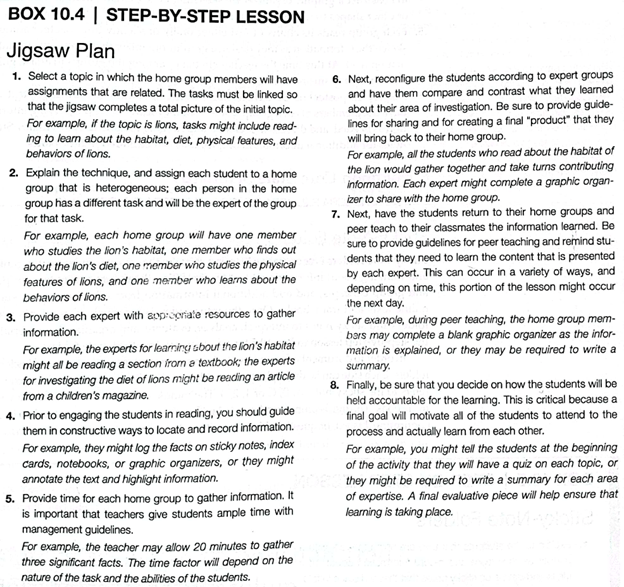
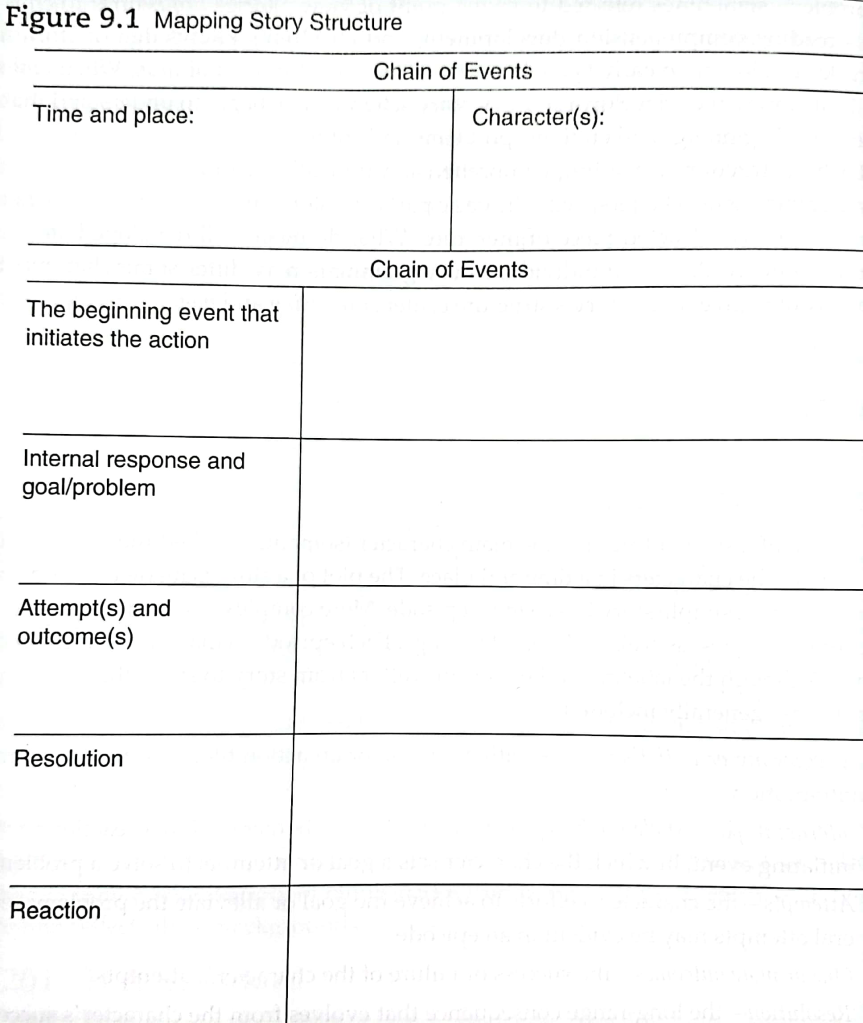
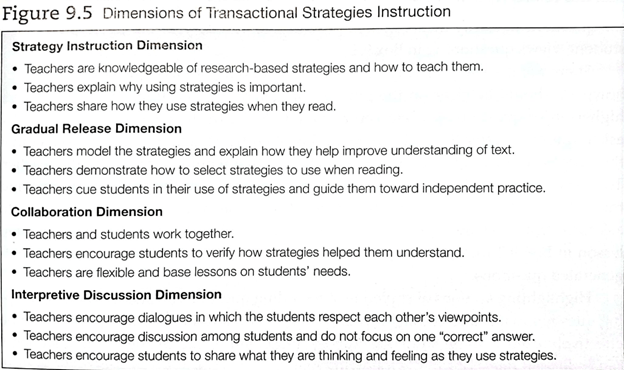
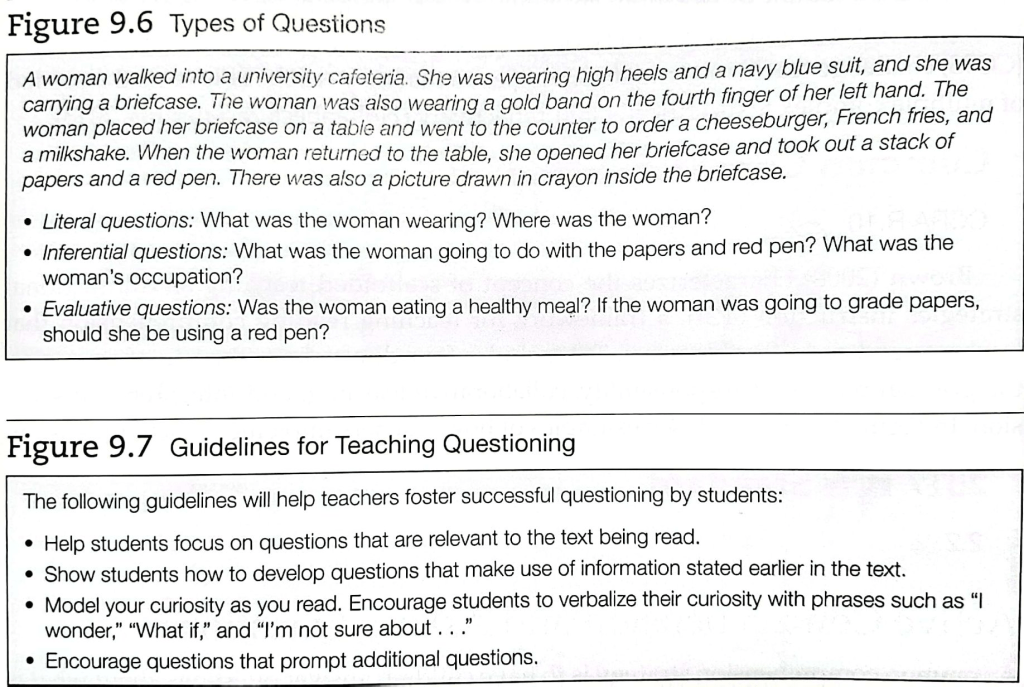
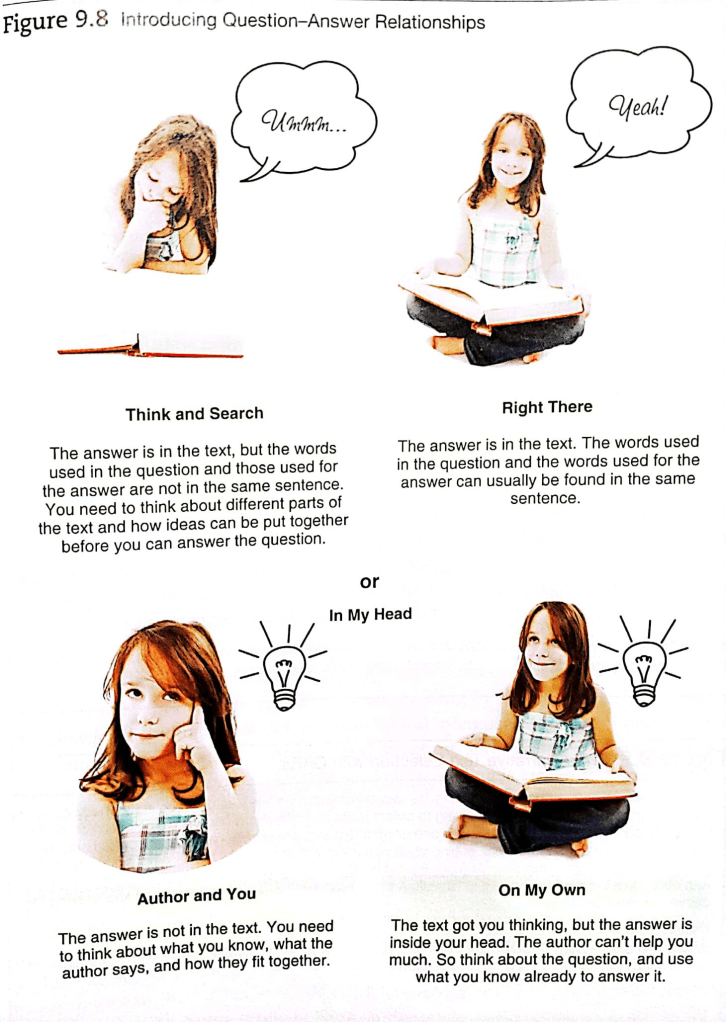
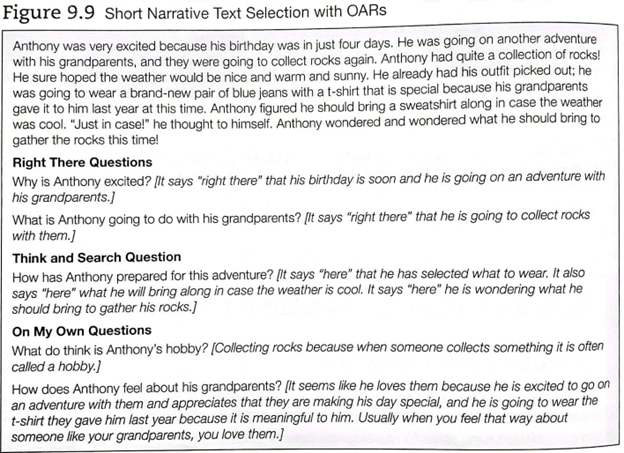
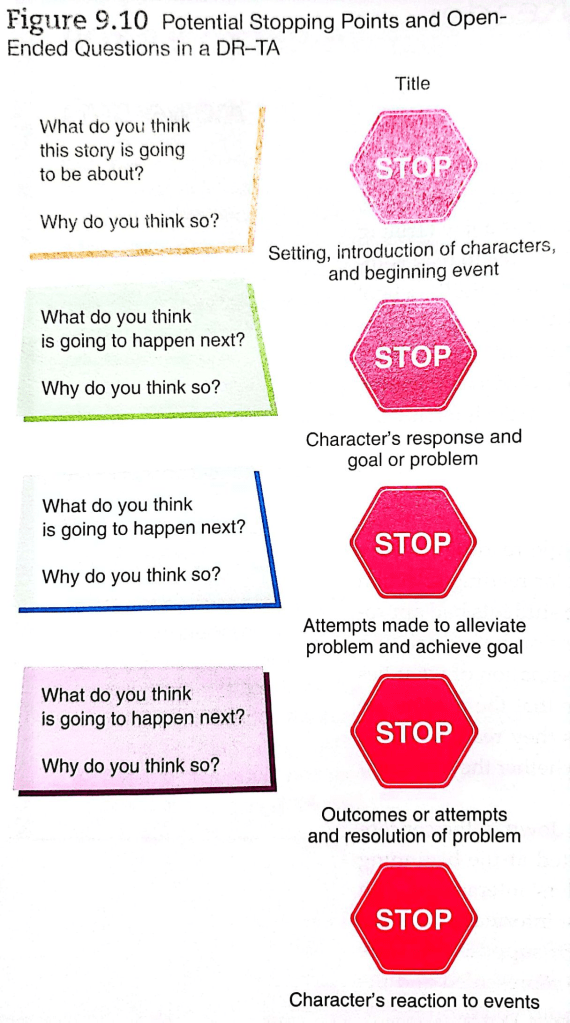
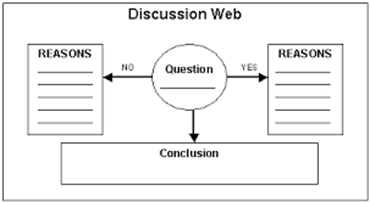
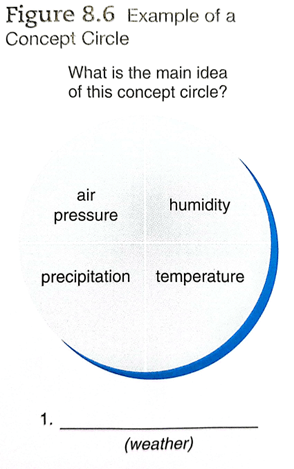
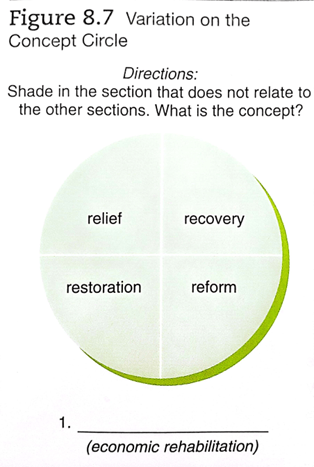
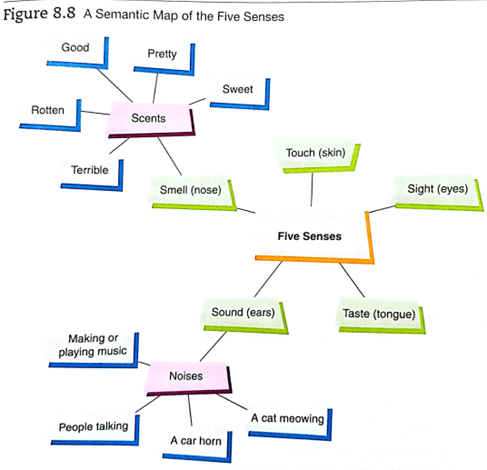
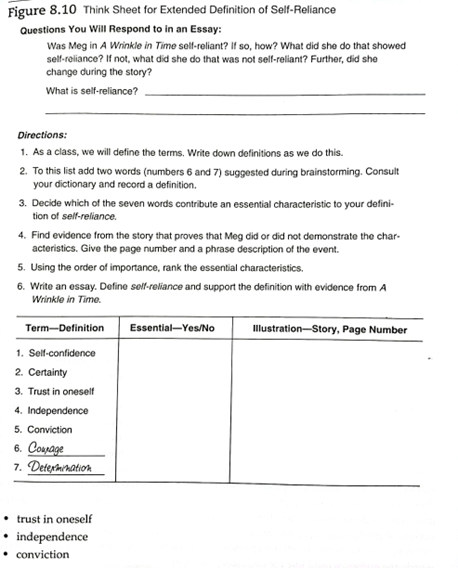
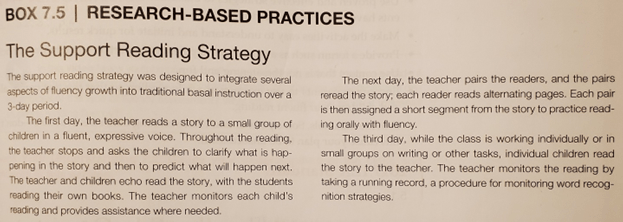
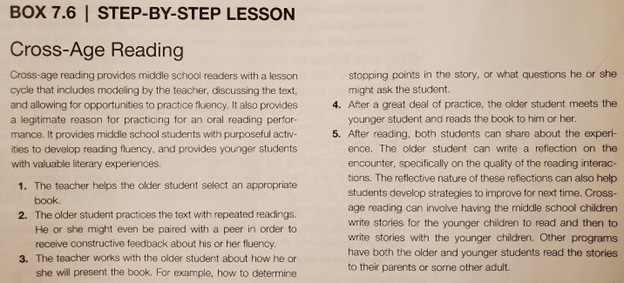
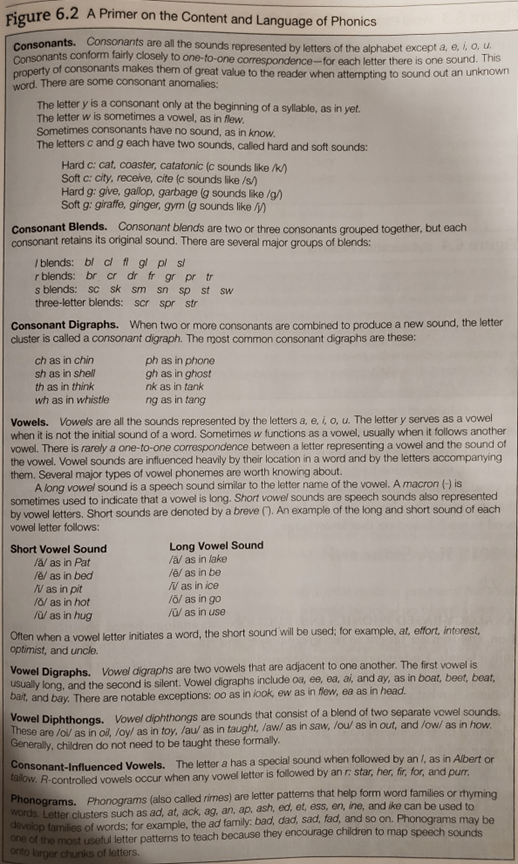
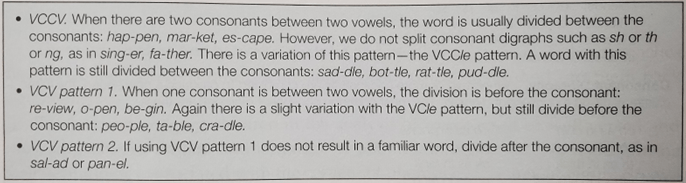
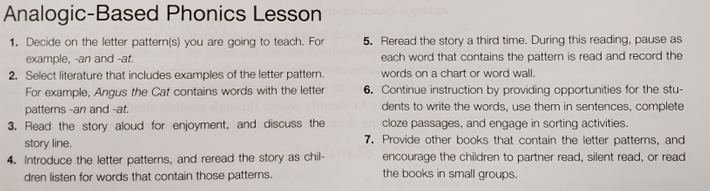
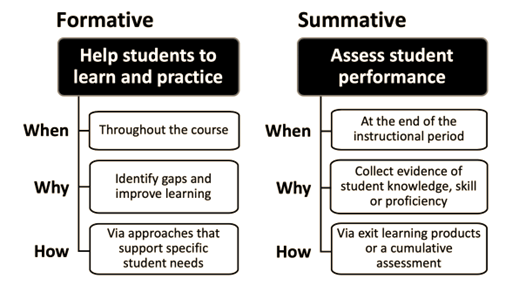
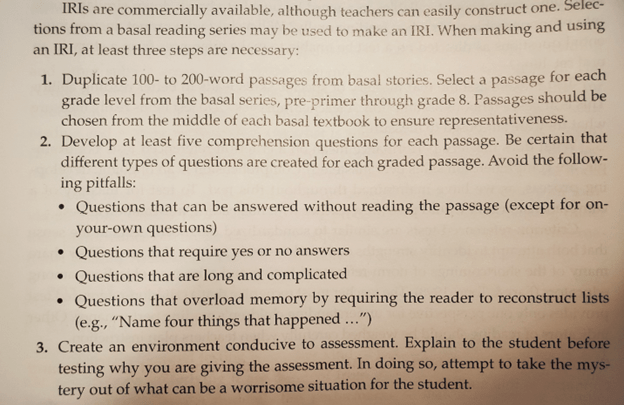
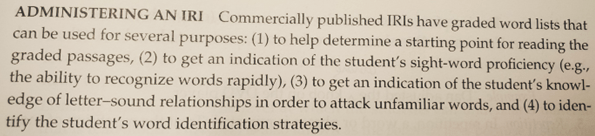
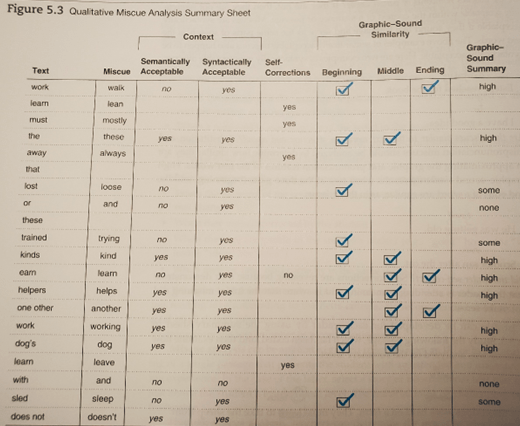
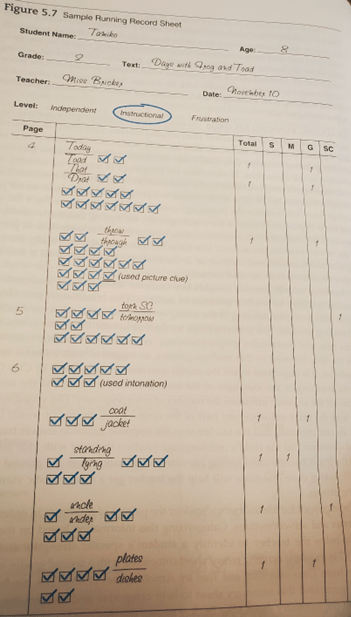
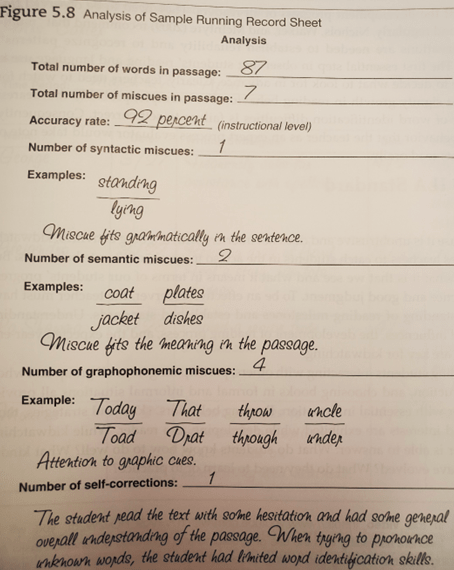
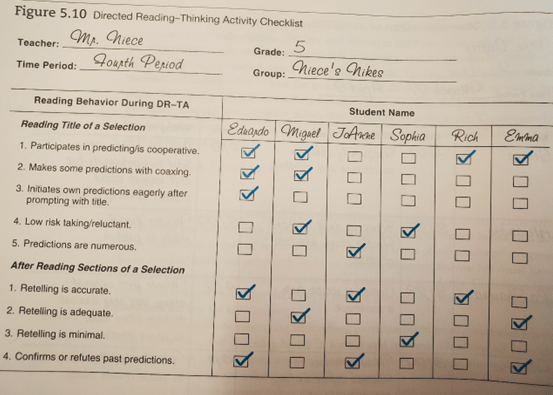
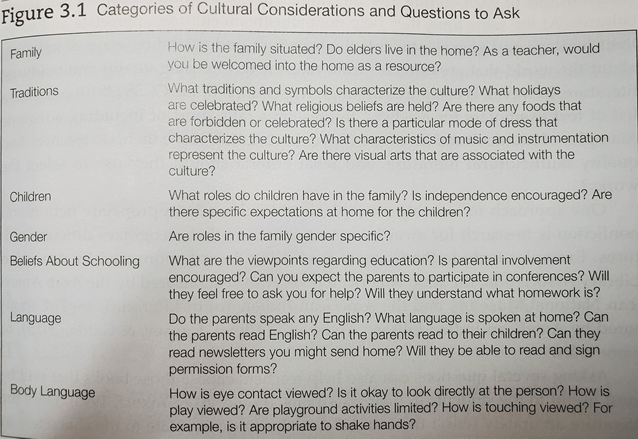
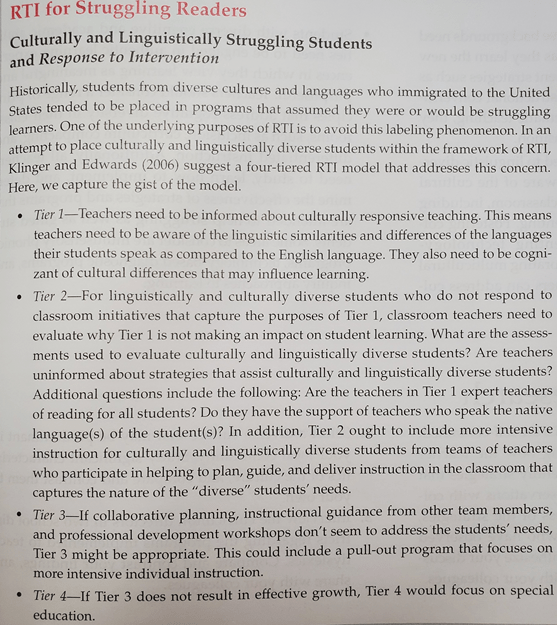
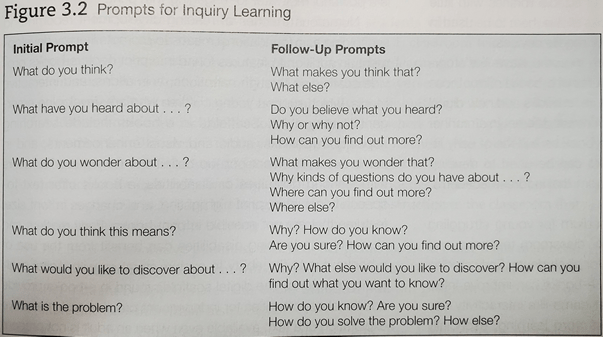
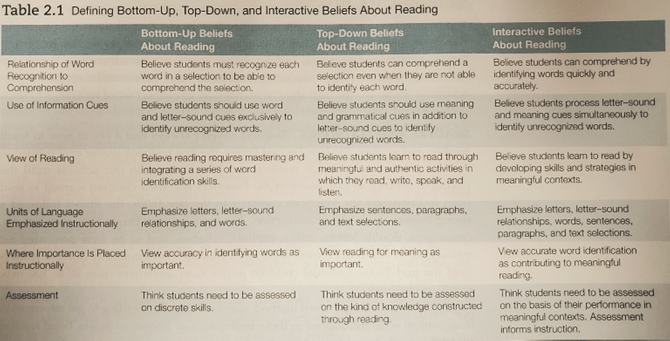
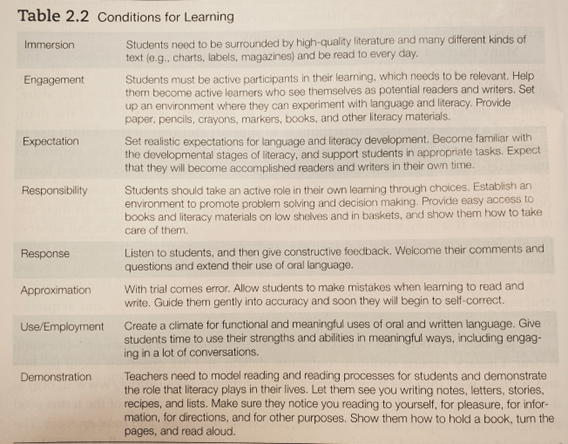
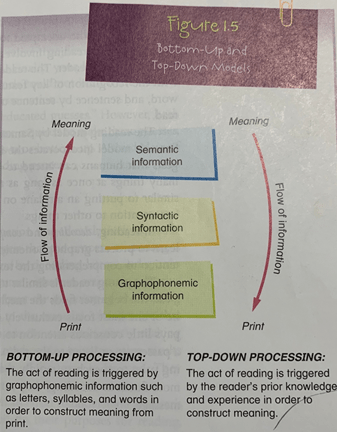
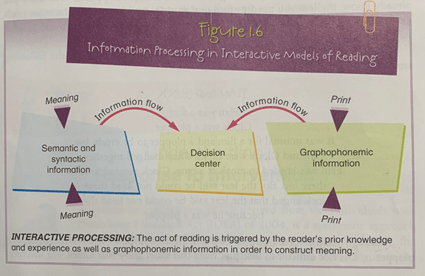
 Travis Davis ENGED 275